Life After Domestic Violence: Rebuilding After Abuse with Lanita Simmons I Ep. 147
Leaving an abusive relationship doesn't mean the abuse's impact ends. For many survivors, life after domestic violence brings new challenges: custody battles, financial struggles, emotional trauma, and the difficult process of figuring out who they are beyond the abuse. In this episode of Beyond the Statistics, Ingrid Dutton speaks with Lanita Simmons, author of The Life Nobody Prepared Me For: The Unspoken Realities of Life After Domestic Violence, about the realities of healing after an abu...

 Apple Podcasts

 Spotify

 YouTube

 Amazon Music

 iHeartRadio

 Deezer

 PlayerFM

 Podcast Addict

 Podchaser

 PocketCasts

 Castro

 Castbox

 Goodpods
Leaving an abusive relationship doesn't mean the abuse's impact ends. For many survivors, life after domestic violence brings new challenges: custody battles, financial struggles, emotional trauma, and the difficult process of figuring out who they are beyond the abuse.
In this episode of Beyond the Statistics, Ingrid Dutton speaks with Lanita Simmons, author of The Life Nobody Prepared Me For: The Unspoken Realities of Life After Domestic Violence, about the realities of healing after an abusive relationship and rebuilding a life that feels like your own.
Lanita describes herself as a "victorious survivor," a distinction that reflects her approach to recovery. She shares how domestic violence can reshape a survivor's identity, decision-making, and sense of safety, and why escaping an abusive relationship is often only the beginning of a much longer healing process.
Together, Ingrid and Lanita explore the challenges survivors face after leaving, including navigating custody disputes, proving abuse in court, overcoming shame, and managing the lasting psychological effects of coercive control. They also discuss why leaving may take multiple attempts, how anger can exist without becoming hate, and why reclaiming even small decisions can be an important part of rebuilding independence.
Lanita also introduces her workbook and Compass Forward community, created to support survivors navigating life beyond abuse.
In this episode:
- The realities of life after domestic violence
- Why healing doesn't end when an abusive relationship does
- Rebuilding identity, confidence, and independence after abuse
- Custody battles, legal abuse, and the challenges of proving danger
- Understanding shame, anger, and the emotional aftermath of abuse
- Finding hope and purpose through the long-term recovery process
Leaving is not the finish line. Survivors deserve support, understanding, and the opportunity to build a meaningful life beyond abuse.
Lanita’s Links:
https://www.compassforwarddv.com/
https://www.beyondthestatisticspodcast.com/guests/lanita-simmons-2/
contactcompassforwarddv@gmail.com
https://www.facebook.com/profile.php?id=61593402442777
https://www.amazon.com/dp/B0HNY1NWPY?th=1
https://www.amazon.com/dp/B0HDJDDKG2?th=1
https://www.amazon.com/dp/B0HFH86S3Y?th=1
This podcast is intended for mature audiences. Some listeners may find the content distressing as episodes may include discussions of violence, human trafficking, and other forms of abuse, including emotional, psychological, sexual, financial, and physical. In many cases, names have been changed to protect those involved. Please note that the statements and opinions expressed by guests do not necessarily reflect my own.
If you are in the United States and need immediate support, contact the National Domestic Violence Hotline by calling 800-799-SAFE (7233) or texting START to 88788. If you're outside the United States, crisis resources are available at BeyondTheStatisticsPodcast.com/GetHelp.
Connect with Beyond the Statistics:
🌐 Website: https://www.BeyondTheStatisticsPodcast.com
💜 Join the Beyond the Statistics Community: https://www.patreon.com/BeyondTheStatisticsPodcast
📧 Email: BeyondTheStatisticsPodcast@gmail.com
📱 Follow on Facebook, Instagram, LinkedIn, TikTok, YouTube, and X: @BeyondStatsPod
If today’s conversation meant something to you, subscribe, leave a review, and share this episode. And if you’d like to continue the conversation beyond the episode, I’d love to have you join us in the Beyond the Statistics Community.
Every story shared helps another survivor know they are not alone.
Music: Tim Crowe
00:00 - Breaking The Silence
03:07 - Meeting Lenita And Her Mission
05:57 - Writing To Get Her Voice Back
11:12 - Why Leaving Is Only The Start
17:57 - The Reality Of Leaving Many Times
22:12 - Choosing Healing Over Hate
28:57 - Children And The Turning Point
33:17 - Permission To Feel And Relearn Self
41:27 - Speaking Out And Facing Judgment
48:37 - Tina Turner And Proof Of Hope
55:37 - From Workbook Blueprint To Full Circle
01:03:47 - Where To Follow Lenita And Close
Breaking The Silence
SPEAKER_01
Hi, Warriors. Welcome to Beyond the Statistics. I'm your host, Ingrid. For a long time, domestic violence was something people simply didn't talk about. It happened behind closed doors, families carried it quietly, and survivors were often left to figure out what healing looks like all on their own. My guest today, Lenita, decided she wasn't going to keep doing that. We talk about breaking that silence and starting conversations that haven't always been easy to have. Lenita calls herself a victorious survivor. There may not be a winner when it comes to domestic violence, but there absolutely can be victory in what comes after, in healing, in finding your voice, and deciding that what happened to you doesn't get to dictate what happens next. Lenita, I am so happy we are here and I am so happy to welcome you to Beyond the Statistics.
SPEAKER_00
Thank you. Thank you. I'm so happy to be here.
SPEAKER_01
Yeah, we had our first conversation a while ago. Right. And I've been told my calendar is getting, I won't even look at my calendar anymore because I don't want to know. I don't want to know. Um, but I am happy that we have gotten this to work and we are here now. And there's there's quite a lot to talk about. But before we get into all of that, do you mind just sharing something about yourself? So those who are tuning in know who they're talking with today.
SPEAKER_00
Well, I'm a mom and a new grand, well, not a new grandma, but a grandma, but I did just have a new grandson. Um, I am from born and raised in the Bay Area from San Francisco. Um, way too expensive. So I do not live there anymore. Outrageous. Um I have been in the refining industry for a little over two decades now. And I am what I would love to call a victorious survivor. I like literally. That's just how I'm that's how I've been feeling. Like I told you, my my scar, my scab just went away.
SPEAKER_01
I love okay. And you, I'm sure, just got everyone's attention because they want to know how do they become a victorious survivor? That's what we're all striving to be. I love that term. I've never heard of I I never even thought of putting those two words together, but it makes so much sense.
SPEAKER_00
Me neither. I honestly never thought that I would be here today
Meeting Lenita And Her Mission
SPEAKER_00
saying that. Absolutely not. I didn't even think I would be here today. So let's start there. Yeah, yeah.
SPEAKER_01
So yeah, I guess you know what? Let's start there. Let's start there. Um, and I mean you did write a book, so we can throw that in there too. I don't know if you want to start with a book, if you want to start there. I do. Yeah.
SPEAKER_00
So pretty. No, never mind the proof copy strip, but yes, this is my book. It is called The Life Nobody Prepared Me For. Um, you know, I wrote this book for a few reasons. Because one, I just it was something I needed to get out there. Um, I needed to completely get my voice back. And and it wasn't like I didn't have it, but I had been giving it to so many people, if that made sense. And so many other people to have a voice through me. And not because I was in a bad place, but because I just felt like going through what I went through, I knew there were so many women still that didn't have a voice. So I utilized my voice to be everyone else's voice. And I felt like once I started to really get into uh educating about domestic violence and just talking about it to anybody that would listen, it made sense to tell people how I got to where I'm at because I sit here today and I may look great to some people, but the road here was probably, if not harder, than the actual being in the relationship itself. I had absolutely no roadmap, no compass, no, not even at times, no support, no one to tell me what this was supposed to look like. So once I got to an emotionally safe place for myself and for my children, because they went through this with me, they lived this with me. I decided it was time for me to give back, you know, and put it in a way that it made sense to us. And when I say us, I mean us as survivors, because we can have clinical definitions and words thrown at us all day from people that have never walked this experience, never lived this, but not some not coming from someone that has actually lived it and experienced
Writing To Get Her Voice Back
SPEAKER_00
it. And this book is not full of clinical terms. This book is full of things that made sense to me, things that I felt, things that I went through, experienced, and I had to navigate all on my own because there was no roadmap, there was no compass. So I created the compass for myself and decided to put it in a book.
SPEAKER_01
I love that because there are so many pieces in the domestic violence realm telling victims how to get out, where are your resources to survive? Here's a shelter you can go to, you can go to the police, all these different places while you're a victim. And then it's almost like once you get out, it's where is everybody now? Where is your support? And it is difficult. And that's not to say I don't think either one of us are saying you're better off staying where you are. No, but it it is it is difficult, and that's a piece that not many people talk about.
SPEAKER_00
Because they think a lot of people, especially if you've never experienced it firsthand, or you've you don't even know anyone that's hexing, or you don't think you know anyone that has experienced domestic violence. You think that, oh, okay, this person got out, she left, or he or she left. End of story. Honey, a lot of times it's just the beginning. It's the beginning of a whole new story now. And this story is not pretty because you are you have no clue who you are anymore. You know, you have spent so much time with someone that has completely stripped everything away from you. Everything, your free will, your freedom of choice, your freedom to make your own opinion, make and have your own opinion, to think for yourself. You spend so much time calculating this other person's mood and emotions and checking the temperature to see if how how your day is gonna go, to where you forget about yourself. You lose yourself completely. So when you get away from this and you finally leave, you have no clue. You don't have a clue who you are, you don't have a clue where to go, what you're supposed to do, and then don't have finances be involved or children be involved because you're really not completely out of there. Because now you have minor children. And if you're going to court and there's custody involved, now you are left with the burden to prove that this person is not safe. If he wasn't safe for you, he's absolutely not safe for these children. You know, so there's so much that goes into play. And don't let, don't let it be someone of a different culture because now you have immigration that plays into. There's so many different things. It's not just, it's never that cut and dry. It's never like, oh, okay, she's gone. Everything is okay. It gets quiet after that. Complete crickets because everybody thinks you're okay and you're not. You're completely lost.
SPEAKER_01
Oh, yes. Well, and going back to the children thing, you have to prove that that person is not a healthy person for your children, but you have to also do it in such a way that you're not looking like this vindictive ex-parent, ex- spouse, partner, or whatever, that is trying to alienate the, you know, the horrible term parental alienation, that you are alienating the children from that parent who, even if they're incarcerated, they still get the rights to parenting. Even if they've murdered the mother or the father of that child, they still have parental rights. And it is just, it's a very difficult road. And I'm glad that you you talk about that and you're so open about that because other people need to know that it's not it's not just them. You're in this relationship, you're stuck in it, and you think you're the only one, and then you get out, and then you're hitting all these hurdles after hurdles after hurdles, and you think, I'm not doing this right. What am I doing wrong?
SPEAKER_00
Right.
SPEAKER_01
And I love that you you talk so candidly about that.
SPEAKER_00
Oh, absolutely, because I think that if I don't, I feel part of me feels guilty if I don't. Um, because there are so many women coming behind me that have no clue what this looks like and what it's supposed to look like. You know, I think that the world and society paints this pretty picture that once she or he leaves, it's over after that. That's not the case. So I feel like if I don't talk about it and I don't tell somebody that this is what may happen to you, you're going to think you possibly're gonna be like, I can't do this, and I'm gonna go back. I'm gonna go back because even though it was bad, at least I knew from day to day
Why Leaving Is Only The Start
SPEAKER_00
how my what was going to happen with my children, where my children was gonna be, where how my finances were gonna, you you make when you're not when your brain is not healthy, you don't make healthy decisions, especially if you don't have anybody to help you navigate those decisions, you know?
SPEAKER_01
Yes, yes, you're so you're so right. The the average statistic, and I read uh Ruth Glenn, she's a former um CEO of the National Coalition Against Domestic Violence. She wrote a book. I don't know if I have it behind me. I do. Everything I never dreamed. So she is also a survivor of domestic violence. She was actually shot, I believe, in the face and survived. She shares her story. She also showed shares statistics. And one comment she put in that book was she doesn't like to share the statistic that on average it takes seven times for a victim to leave their abuser before they stay gone. And she doesn't like to share it, and it makes sense because some people take nine times, twelve times, fifteen times. And if they hear that seven times, they're thinking, I'm not doing it right. I'm failing at this too. And that's not what any of this is. There's no, we can all share our stories, and we all need, I'm not going to say we all need to share our stories. Those of us who are capable of sharing our stories and are capable of talking about what happened, we need to do that so that those who can't, uh, or those who don't want to, and there's absolutely nothing wrong with that, um, they can hear that. Here are all of these different stories, all of these different outcomes. It took that person 12 times and they still got out and it's and they're still okay. There's no exact right or wrong way to do anything.
SPEAKER_00
Absolutely. There was no, there's no blueprint. I I fail a whole bunch of times. Um, the last time I left, the final time was not the first time, you know. Um, I don't know if it was seven times, I don't know if it was 12 times, but it was. It was multiple times, you know, that either I left or even he left. But because you don't know what this is supposed to look like and how you're supposed to feel, and especially if no one is talking about it. How am I supposed to know that I can't fix this? How do I know that this is not a me problem? Because that's how I internalized it. I didn't have any I didn't have anyone else to talk to this about. Mind you, this was not a first for me. I saw domestic violence from my mother. I knew that my sisters had experienced this, but none of us talked about it with each other. It was just something that after it was over, it appeared to be over. I thought my two big sisters were the strongest people in the world because one day it happened and then and then it was over. We never talked about the journey that it took them to get to where they are. And it's funny because now that I'm doing this, now we're talking about it. All of these years later, now we're talking about it. And it's like, oh my gosh, Nita, you would be the one to make all of us start talking about this. And I was like, yeah, because we weren't. Nobody was talking about this. So I had to do this by myself. I had to figure this out. You know, I thought you guys had like a magical answer, but I had to figure this out. There was no magic answer. There was no right or wrong way. There was no such thing as you're not going to make a mistake. You're not going to miss this person or miss what you thought this person was, or the idea, you know, of what you thought you had, you know, there all of that is going to happen. You are going to question every thought and every decision that you have because that's what you're used to. You're used to somebody making you question and doubt everything. So even after you're gone, you're still going to do that. You're still going to do that. Yes. Even years later. Yes. Same. Absolutely. Absolutely. The only difference is being able to recognize that that's what's happening. And realizing that this is not a me thing. You know, so you it's every day. Every day you're being aware, emotionally aware, physically aware, you know, of yourself and your surroundings. It took years for my nervous system to realize wait a minute, hold on. We're safe. I'm almost 50. I will be 50 in a couple months. And it probably has taken all of the 15 years that I have been away from him for my nervous system to finally realize that we've been living this whole time and not just surviving. I didn't know what it looked like. So no one was there to tell me.
SPEAKER_01
I say this all the time. I think on the podcast and definitely off the podcast, I'm I'm also going to be 50 in a couple months.
unknown
Oh.
SPEAKER_01
Wait, well, you do too. If you're not watching this, you need to come on. You need to see Miss Lanita. She looks incredible. We need to have another episode of like, how do you look, how do you get to 49 and look like Lanita? Um I'll have to start a different, a different podcast for that one. Um, but it it's so it's to be in this place at this age is it's such an incredible feeling. Um, I I we were talking before I hit record of of being able to just breathe and feel so light. And I I wonder, I remember being in my 20s and people saying, well, when you get to your 40s, you don't care what people think anymore. Well, I was in my 40s and I still cared what people thought. And I thought, I'm doing 40 wrong. I'm
The Reality Of Leaving Many Times
SPEAKER_01
doing that wrong too. But I don't know because now I don't care. Now I feel like I'm putting so much of myself out there that nobody can really say anything bad about me because I've already said it or I've already lived it. I don't know if it's because of what I've been through or the work that I've done to put into myself to get to this point, or if it, I don't think it is just some magical age thing where you get to this age and every you just are blessed with this, I don't know, this vision that you can just see everything so much more clearly. It's like you climbed this mountain and you get to breathe all the clean air at the top of the mountain and see the beautiful scenery. And there might be another mountain. I know there's another mountain there that I'm gonna have to come down this mountain, climb up another one. But it doesn't seem when you get up that first one, it's like, okay, I already did one. What's another?
SPEAKER_00
Right.
SPEAKER_01
It's it's just this cool place to be, don't you think?
SPEAKER_00
Ugh, it's amazing. It's amazing. It is it is light, it is airy, and I think that once you get up there and you look down at how far you've come, one, and then you realize things were not always as complicated as life made them seem. You know, I know that I had so many different emotions. I experienced anger and just like, what is going on? You know, I'm late getting here. No, I wasn't. I got here just when I was supposed to, you know, and I had to learn that to stop looking at everybody else's clock, everybody else's path, everybody else's journey, and just appreciate mine, all of the rocks and the pebbles and the mountains and the hurdles, all of them. Um, and I think a lot of who I am today I attribute to my children. Absolutely, absolutely. I don't even think I know that had I not had them, I probably would have never left that relationship. Yeah, I would have never left.
SPEAKER_01
And and it has an impact on them too.
SPEAKER_00
Oh God, yeah. Absolutely. Absolutely.
SPEAKER_01
I uh I was actually thinking since we were talking mountains, I'm sure I'm I brought that that up. I bring up the weirdest things, but how we were both saying it's not easy. You don't just climb up that, you don't get out and then you just hike up this mountain, and it's it's a long mountain, but it's an easy mountain to climb. It's not at all. I feel like I was hit, I would get three quarters of the way up and then hit a landslide and just slide all the way back down and then have to climb back up. Uh, so you do have a book where your story is in it, but is there any parts of your story that you want to highlight for others to hear so they understand like where you came from and how you got to where you are without without disclosing more than you want to disclose?
SPEAKER_00
Um, honestly, I I'm at a point to where I'm a complete open book. I don't, I don't have really anything that I won't disclose, especially about how I got here, you know, and the things that I've experienced. You know, a lot of people say, How do you talk? Why do you talk so freely about it? You know, and how can you smile and laugh about some of the things that were completely horrifying that happened to you? Um, and then a lot of times people say, How come you don't hate this person? I get that a lot. Especially in the beginning. Oh, you don't hate him. Oh, she's going back. She doesn't hate him. I have no time and no space. Do you know how much energy it takes to hate somebody? Yes. If I spend all this time being angry
Choosing Healing Over Hate
SPEAKER_00
and hate this person, I couldn't be the woman and mother and sister and friend that I am today. I couldn't I have a two week old grandson. I would not be able to be completely present. To enjoy him and to see him and to be able to experience my children. I don't have room for hate. And if I focus on that, somebody is going to not be able to hear what I have to say. Somebody is not going to get the message. You know, it comes across completely wrong when you are bitter and angry and full of so much hate. Nobody wants to hear that. Nobody really wants to listen to that. You know, you're just kind of spreading and perpetuating more negativity. You know, I am in such a good place. Honey, I all I can do is wish him the best. That's it. Literally, I wish him the best. And I hope that at some point in his life he gets the help that he needs so that he doesn't do this to somebody else. But do I hate him? Absolutely not. Um, and it's funny to say because I spent, I spent, I had good times with him. I had good times with him. Um, I had also tumultuous and horrifying times with him. Both of those can exist at the same time. That doesn't mean I'm gonna go back. That doesn't mean that my journey still doesn't get to look like this. You know, that doesn't get to that doesn't mean I don't get to be happy today. I chose this. And I chose I choose it every day. You know, I wake up and I make a conscious decision every day that this is the life that I want. And I'm creating that. Yes, yes.
SPEAKER_01
So it hate, I'm the same way. I don't know that I've ever hated him. Have I been angry? Absolutely. And there's definitely a place for anger.
SPEAKER_00
Absolutely.
SPEAKER_01
I think I came to the same result like realization as you that if I spent my energy hating him, it did me no good. It's there's no clear winner in any of these situations. And no matter what, if you get out, you still have to heal. There are still perhaps buried triggers that you don't even know are there until all of a sudden they they sh they pop up. And it's it's not fair and it's not again, it's not an easy path to go. But if you want to not necessarily be the winner, ooh, well, we're gonna use your word again, victorious. If you want to be a victorious survivor, you let it go. You stop focusing on hating him or her and and focus in on yourself. I think there's a there's a Buddhist saying, and I'm not going to say it right, but it's something about getting bit by a snake. If you're bit by a snake and you're dying from the poison of the snake, but your goal is to just find the snake and kill the snake, you're still dying of the poison instead of taking care of the poison and taking care of yourself. There's a really, really beautiful way to say that. And that was not it, but that's that's the gist of it. I like it. I think we got it. Yeah, I love quotes, but I am unless I have it written down in front of me, I'm terrible at saying them or re-quoting them. But I'll get the gist, I'll get the gist across.
SPEAKER_00
Yeah, no, you good, you definitely got it. Um, and I I agree with that. I agree with that, and I think that's why I don't I don't focus on it. Um anger definitely had a place, and I won't say that I wasn't angry because being angry helped me. Being angry, honestly, kept me safe. Um in a lot of situations because of the person that I am. I've always been, I love love. You know, I am always been like happy, go lucky, you know. I want, I just want to love people. I want people to love me, and I couldn't do that. You know, I'm always wanting to see the better side of people, the good in people, and justify justify people's behavior. Oh, maybe, you know, you've had a trauma-based past or something, you know, to excuse your behavior. And I knew that I could not do that. My children could not, could not survive that, you know. So I needed that anger. So to say that anger didn't exist and I just had this fairy tale life and fairy tale ending, absolutely not. Absolutely not. I was a mess, you know, but angry, absolutely. I was angry and confused, you know. But like I said, if it wasn't for my children, I probably would not have gotten out of that situation. I probably would not be alive because at the point that I finally did leave, I didn't leave because I wanted to leave or I felt something I cared enough about myself. He had already taken all that away from me. So it was not about me. I'm not gonna sit here today and say that I wanted to save my own life. Absolutely not. You know, I was at a point in my life in my life with this person that I prayed to God, don't let me wake up so that I don't have to do this another day. You know, either let him successfully unalive me, or you do it so that I wouldn't have to suffer. But fortunately, he didn't do that. And I had to remember my reason just period for life, has always been my children. I had them on purpose. None of them were oops, accidents. All of them were intentional, all of them were created because I chose them. I wanted to be their mom. And I knew that if I didn't figure this out, I would not get to be their mom anymore. And they didn't deserve that. Whether I cared about me anymore, they didn't deserve that. So I was like, okay, you gotta find it. You gotta find it somewhere for them. So again, like I said, everything
Children And The Turning Point
SPEAKER_00
about my journey has been so much about them and being better for them. But then it became about me. Because my daughter reminded me, hey, mom, you have been great for us. You know, we don't blame you. That's when the shift really started for me. You know, being that voice for everybody else, and even taking my care of my children and trying to be better for them after the fact, I still wasn't really healing myself, you know, and it really took my daughter holding that mirror up, saying, Hey, mom, we're proud of you. You know, you have you're doing this already, but you're doing this for the wrong reasons. You know, it's beautiful that you want to help everybody, but you can't keep helping everybody if you don't help yourself. And you've got to really heal yourself. Honey, that was one of the most triggering things to me.
SPEAKER_01
Yeah, when you're when your daughter's momming you, that is so what happened? What did you do after that?
SPEAKER_00
After she said that um my feelings were hurt. My feelings were really hurt. Um, but I wasn't offended um because I knew where it was coming from. I knew where it was coming from, but I didn't know what to do because honestly, I never put myself first, ever, because I didn't know how to do that. I didn't know what that looked like. I didn't, my childhood was not the greatest. So my trauma didn't just come from a domestic violence relationship. A lot of my trauma I came into that relationship with. So it was easy for him to do what he did to me, you know. So I didn't know what that looked like. I had to learn what that looked like and I had to talk. I had to use my words, you know. I had to axe what that looked like. I had to start talking about how I was feeling and being okay with the emotions that I was going through and that I was experiencing. And I had to give myself permission. And I know that may sound crazy. How do you give your own self permission to feel your own feelings? Because I I never did. Everything of my own was always for somebody else. I feel this way for you. I feel this way because of you. I'm going through this for you or because of you. It was never just about me. You know, so I had to give myself permission to be okay and to feel okay and not be okay some days, and to see like, wait a minute, I'm still okay, even when I'm not okay. Like, is this what it looks like to get up in the morning and to have a cup of coffee because I chose to? The silliest thing. I love puzzles and plants and taking pictures of random things, learning about me and telling myself that was okay, realizing that this was okay, you know. It was very weird in the very in the beginning, because as a child, you're supposed to already know these things. I didn't. So it was like I had to unlearn everything that I had learned my whole life. And even though that sounded hard, honey, that was the most exciting thing because now I'm learning and I'm experiencing things almost like a child. You know, I get to walk outside and put my feet in the grass, and it's like grass that I've never walked in, I've never stepped in before. How many times have you walked through the park with your socks and your shoes off? You've stepped in grass. But for me, every experience now is like a brand new one because I'm giving myself permission to feel all of it and to experience all of it. And whether it's good, bad, and different, I am in a place where
Permission To Feel And Relearn Self
SPEAKER_00
I love all of it. Because it's all new for me now, you know?
SPEAKER_01
And that's such a beautiful way to put it too, because you're in the grass and you're feeling you are feeling the grass, how it feels to you, not wondering, well, are my kids what are my kids feeling? Is the grass too hot? Is it too cold? Is it too wet? Is it too dry? Am I allowed to feel this way? They don't like it, but I do. Am I allowed to say I like it? Yeah. Yeah. I think a lot of people can probably relate to that. Either they've grown up that way or these relationships have made them feel that way.
SPEAKER_00
Right. Because you're told, you know, whether the trauma is based in your childhood or from this domestic violence relationship or a combination of both, and throughout your life, you feel like you're not allowed. You don't have permission. Someone has always made these choices for you. Someone has always made you feel like your feelings are not your own. You're not allowed to feel this way. You know, as children, you think about it, you know, like little boys. Little boys cry. You're not allowed to cry. What do you tell little boys when they do certain things? Don't do that. Little girls do that. Or when they pick up a doll, little girls play with dolls. No, that's not for little boys. And little girls are told, no, this is not for little girls. So as children, we're immediately told how to feel, what to think, what emotions we're supposed to have, some based on our gender, some based on our culture. So you grow up with these preconceived notions that you're not supposed to feel these certain things. Well, what happened to us just being human? And these are human emotions, and we're supposed to feel them. Supposed to. I mean, I don't know about anybody else, but I have a heart that beats, and I've got blood in my veins that pump every day. So I'm human. So I am entitled and I am allowed to feel whatever emotions that I feel, and I can sit with them. But what I do not allow myself to do is just live in them and let them become me. You know, I have learned, thank goodness, I have the most amazing children. I have learned how to sit and feel and allow myself to feel. And then moving past it, giving myself permission to feel, understanding why I feel the way that I feel, instead of pushing it to the side or brushing it under the carpet or trying to numb it so I can keep going through the day and keep moving and staying on autopilot so I don't have to focus and I don't have to really heal. Because if you do that, and I did that for a very long time, you will get hit with this semi-truck out of nowhere. And that truck is going to be full of every emotion, every feeling, every experience, everything you try to put away. It's going to hit you all at once. And honey, you're not going to have a clue. You are not going to be able to unpack all of that by yourself.
SPEAKER_01
Oh, you were so right. I always compared myself to a volcano where I just let everything kind of boil under the surface. And then eventually it just erupted, and all the lava's coming out, and I'm trying to pull it back in, and it's it's too much.
SPEAKER_00
Right.
SPEAKER_01
Uh, so talking about emotions, and then that what your family was saying is of course you would be the one who would get everyone to start talking. How did that go at first? Was it um was it just like yeah?
SPEAKER_00
Well, with my sisters, it wasn't it wasn't hard talking with them. Um, my big sisters have always been two of the strongest people in the world to me. Like I've always looked up to them. I've always thought that, you know, there wasn't anything that they couldn't do. And our relationship, because we all through, all three of us experienced trauma going up as children, that made our bond as sisters even stronger. So it was easy to talk to them. Like me and my sister Shelly, I still call her by her childhood nickname that we made up for each other. And she still calls me mine. And my old our older sister Tish, it's the same for us three. Um, but I think a lot of that was based on the trauma and the things that we created outside of that trauma so that we can survive. And today it makes it so much easier to talk to them. But to talk to outside of them, now that was the real struggle. That was the real struggle. Um, but it took Shelly and Tish reminding me, hey, Nita, you already do this anyway. You know, it's just you do it in small safe spaces. It's it was it would be a situation to where if I knew a friend of mine was going through something, you know, I'm talking to people that are close to me, but not spreading and talking to people outside of that circle because I still felt how are people going to receive this? You know, are people gonna judge me if I am completely honest and I say everything that I experience and everything that I felt? You know, is it people going to turn that back on me? You know, and I knew that my sisters didn't do that, they didn't blame me, but I had talked about it before, and some people blamed me and said that because I stayed so long or I even went back, it was my fault. You know, I must have wanted it to happen. I enjoyed it. I had people tell me that I was a horrible parent because I stayed and I didn't protect my children, you know. So I had all those things that I was like, I was afraid to even hear. But also, I knew how I felt. I knew how I felt when I was in that relationship. I knew how alone I felt. I remembered the days where the only safe space in my house would be a closet or a bathroom. I remember rocking on the bathroom floor, wondering if I'm going to die, if I'm ever going to get my children out of this hail that I'm living in. And I'm like, I cannot just, I can't keep talking to my sisters. You know, I have got to not worry about what anybody else says to me because I made it for a reason. This person tried to kill me multiple times. So I'm here for whatever reason I'm here for. So I've got to make this count. Somebody has got to hear this. I don't want another woman rocking back and forth in the bathroom. Wondering, is she going to die? Wondering, is this person going to finally kill her? Wondering, what are her children going to do? Honey, there were times when I literally would sit down and write out everything because I didn't think I was going to be here that next day. So I had to make a list of where everything was going to go. Yeah. And my children were small, my daughter being the oldest. So on the papers in these notes, and sometimes they would be on small pieces of paper, and I would stick them in pockets or places that I would think just in case somebody, if they find my body, they'll find
Speaking Out And Facing Judgment
SPEAKER_00
these little pieces of paper. They'll find little recordings, you know, of what to do with my children, phone numbers, who to call. Like I literally had these things written down and planned because I didn't think I was going to be here. There are so many women that are still feeling like that. So it doesn't, it's not okay for me to not say anything anymore. It's not okay for me to wonder how somebody's gonna see me and if somebody's going to judge me. I don't have time for that anymore. There is something in me that is like, it's almost like fuel at this point, you know, because I constantly think about that. You know, when I am educating somebody else, excuse me, I'm thinking about that woman, you know, that feels dark, alone, has no voice. Maybe nobody even believes her. So using my voice once again.
SPEAKER_01
Yes, yeah. I I had the same, and I know that with my situation, I wasn't isolated as much as other victims are isolated. I wasn't physically isolated. I had a very supportive family, very supportive friends. I self-isolated because I didn't tell them anything that was happening. Um, but yeah, it's it's knowing that there are others out there who are in the same situation or even worse, that is what pushes some of us to to speak. I mean, you weren't saying anything, and now here you're on a podcast and you wrote a book about it. Um did you did you know how prevalent domestic abuse was? I mean, you you grew up with it. You said you saw your mom, your sisters. For me, I I was educated on it, but I didn't really recognize how prevalent it was. I started talking to a few very close friends about what had happened, and the group of three uh four of us, one by one, the other three said, Yummy two, yummy two, yummy two. Wow. So I started wondering like how prevalent is this? I didn't realize it. And I don't know, did you come to that same recognition, or was it something that you already knew?
SPEAKER_00
Yes and no. So even before I saw it with my mother as a little girl, my two favorite movies were the Tracy Thurman story and The Burning Bed.
SPEAKER_01
Okay, yeah.
SPEAKER_00
Yeah. So I knew that it was something. Um Those movies, those two movies, as a little girl, I was like, Oh, I'm gonna hell. I'm I'm gonna change, I'm gonna fix that. That was end. You know, you're a little girl. You just you know, those movies made me cry every time I watched them, even today, they still make me cry. Um, so in that aspect, I knew that it was something, you know, and then I saw my mother go through it. So I knew that it was still something, but did I knew did I know how deep it really was? Did I know how many people really experience it? Absolutely not. I as much as I saw it on a TV or in my own home, and it wasn't my father, you know, so I thought like, oh, okay, this doesn't happen in, you know, like homes where parents or two parents are together. This was my stepfather, you know. So I honestly thought that it was isolated to just maybe a few people, you know, like I knew it happened to my mom. I, you know, I knew that it had happened to my sisters, not to what extent, you know, until years later when we finally talked about it. Um, but I really didn't know how bad it really was. I had no idea. Um, because again, you're a kid and you're watching movies, these are just movies. And once my mother was out of it, she didn't talk about it. You know, she kept going on with her life. I didn't know that a lot of the things were that was going on with her and the struggle she was having were like residual effects of this relationship. I had no idea until I went through it myself. But no, I had no idea it was that prevalent, but I did know it existed. But to this extent, absolutely not. And that was part of the reason why I was like, oh my God, you don't really have a choice. You have to say something, you know, you have to use your voice some kind of way. Um, because I've never been shy to talk to people. That was never an issue, especially out of all of my siblings. There's nine of us. I am not the shy one. Um, so it kind of made me like the designated one. Like, hey, you know, you're in people's faces anyway. You might as well just kind of change what you're talking about, you know, and I was like, hmm. You go through life and you don't really know what your purpose is. And I was like, once I started talking about it, it felt so natural and just so good, you know, especially when I was able to actually talk to someone and help someone to know that I could actually help someone by just talking to them about things that I've gone through and sharing my experiences. I was like, oh, this is necessary. I'm loving this. I'm loving this for you guys, and I'm loving it for me. And well, thank you for giving me a purpose at 49. I appreciate it. Um, so no, I'm I'm happy to be here. I but I'm necessary because there are so many women that are not here, that are not in this place, that are not even outside of that relationship, away from it, they don't feel comfortable talking about it. Sometimes it's way too triggering. Even for me, like there's still moments I'll talk about it, and some some of it is it is emotional, you know. So you cry. That's okay. I'm
Tina Turner And Proof Of Hope
SPEAKER_00
a human being, you know. Again, I'm gonna go through all these emotions and it'll happen. It just is what it is. I don't make an excuse for it anymore. I don't apologize for it anymore. It's just part of me, you know. But being quiet is not going to help anyone, you know. So those of us that are in that place and are able to talk about it, we're necessary because those women that are not, they need us, you know.
SPEAKER_01
Yes, I agree so much. And I wanted to sort of piggyback on um favorite things from childhood and not talking about things. So, growing up, one of my favorite musicians, and probably because she was one of my dad's favorites, is Tina Turner. And yeah, I actually I did two episodes on her. I don't know if they're good. It was the first year I started this, so I'm not sure. If anybody does go back to listen to those episodes, I may need to apologize. I'm not sure how how well I told her story. But growing up, I knew I knew Ike was a bad guy, heard about it. I but it was almost one of those things too. Like he was terrible to her, he beat her, she got out of it, and she became this icon. And I didn't know how much of that story existed. I don't know if it was just my own ignorance of not learning about it. Um, I mean, I was also pretty young, so I don't, I'm not blaming myself for not taking it upon myself to learn about what happened to her. But she did write a book. I think it was called I Am Tina. I have that somewhere around here too. But her story was so much more than just she was in this relationship, he beat her, she got out of it. And look what she became. There was so much struggle that happened. She left and went back. She left and was forced back. He would find her and bring her back. And when she got out, she had her own mountain to climb. They canceled performances, and he put her down as the reason the person the performances were canceled. So she was financially obligated to pay these venues back for not performing. She had no money. She cleaned her friends' houses to, you know, make a living for her stay. And it was all of that that I never realized. She didn't just wake up. You didn't just wake up and be where you are right now. I didn't just wake up and come here. Um, Tina Turner didn't just wake up in the rock and roll hall of fame. It took a lot to get here. And I always think if Tina could do it, I can do it. You can do it. We can all do it. I mean, she literally ran across a busy intersection, almost got hit by a truck, bloodied head to toe with like 34 or 36 cents in her pocket. And that's how she never went back after that. And it's it is something we need to talk about. It is something that people who have who have lived that, who have gotten out, who have this hope. And I that's the core of this podcast is I want people who are listening to know there is hope.
SPEAKER_00
Absolutely.
SPEAKER_01
Because you do have. I did the same thing. I would pray, like, let me just not wake up. And some people actually do take the steps so that they don't, because that peace is so much calmer to them than the reality that they're living, but there is a way out. There is a way out and there is a way to find peace.
SPEAKER_00
There is, there is, and I don't want someone to think that if they don't do it the way I did it, that they're not doing it right. I want them to understand that it doesn't have a face, it doesn't have a picture, there is no right or wrong direction, there is no right or wrong feelings. Like everything that you are going to experience, you're supposed to. You're supposed to feel it. You're supposed to go through it. You have to uh allow yourself to feel all of it and to experience it because a lot of times that's how we repeat it. Because we don't understand the feelings and the emotions, so we brush them away, and then we end up repeating this, and it becomes a cycle that we can't get out of. So you have to one, give yourself permission, tell yourself this is okay, this is this is normal. Not only that, like I'm not that same person that I was before the relationship. So my life had a whole new normal, and I had to learn what that was and what that was gonna look like. So you can't expect yourself to be that same person that you were. You trying to get back to that? Honey, you're gonna be struggling for a long time. You know, you are a different person now. Not to say you're a bad person, but you're different now. So now you've got to take time to learn about this new person, learn who she is, learn what she likes now, because her likes and her dislikes are probably not the same anymore. You know, matter of fact, you might not even know what they are because you're so used to somebody else telling you what you're supposed to like and not like and feel and not feel. So instead of being afraid to go on that journey and climb that mountain, embrace it. Embrace it and enjoy it and take all of those experiences. Honey, you're alive. You are alive, like that in itself makes me emotional. Like when I think of how many times I could have not been alive, how many times he hit me and you know, either knocked me out or made me hit my head and knocked me unconscious, you know? How many times that I had the potential to not be here, you know? I'm alive. So every experience, oh, I'm going to enjoy it. Even the ones I don't want. I get to experience life and free will. Free will.
SPEAKER_01
That's amazing. It is amazing. Writing your book, did it I'm sure it was an emotional thing too. Yeah.
From Workbook Blueprint To Full Circle
SPEAKER_01
How hard was it to get back into those pieces of your story?
SPEAKER_00
Um it wasn't as hard as I thought it was going to be. Honestly, before I wrote my book, I wrote a workbook before that. Um and that probably, I don't know if it was harder or maybe equally as hard because the workbook was more of helping something, helping someone to get out of the situation. So that was more of I had to physically put myself back into every situation and every scenario. I had to go back there, all the way back there, to be able to kind of build a blueprint. That's where it started before the book came. The workbook came. You know, I did that first because, like I said, I wanted to give someone a blueprint on how to, before you get out, this is this is first. That workbook came first because I got to get you out first. And then once I get you out, now let's talk about what's going to happen and what this may look like for you once you get out. So it came in phases. That workbook that was ripping the band-aid completely off. A wound that I promise you, I thought I was healed from. I thought that I did the work. I did the work, I walked the walk, I sat in the support groups, I had the therapy, um, I uh I became an educator, I created curriculum, you know, I worked in this refining industry for over two two decades and helped facilitate their wellness with other organizations. And I was like, Oh, okay, I'm great. And then I needed to write the workbook, the blueprint. Because somebody says, Well, how do you, how do you leave? What does that look like piece by piece, and not in clinical form? I was like, oh gosh, it's always your kids that challenge you. My son said, Mom, well, how what does that look like? That means you raised them right. So I was like, okay. And uh honestly, I didn't think much of it. I thought, okay, I'm just gonna do this and get it done. No, absolutely not. Um, I literally revisited every single situation and every single scenario that I lived through. I went back there. So that for me was the first time ripping the band-aid off and realizing that this was going to be a lot harder than I thought I would thought it was. Um, I even had to sit with myself for a minute and and think, am I really ready to do this? Am I where I think I am? So every page in that workbook was extremely difficult. Um there were times where I sat back and was like, oh, I need to take a minute. I have a trail next to where I live, and I would take walks because it was just so heavy. Um, I would share bits and pieces on Facebook, you know, um, and was getting feedback, so that helped a little bit. But yeah, that was very hard. That was very hard because, like I said, I had to be back there, and it was like it was happening in real time, you know, because there is a section in there where I'm talking about preparing and just putting things together, you know, little things at a time, you know, maybe giving your important paperwork to someone that you trust. And those were all things that I did. So it was like every every step, everything that I did to prepare and get myself out of there, even though it took years, I put it in a workbook and then created a journal after that. Um and I felt better, but I I didn't feel like I was done. So then that's how the book came. Because I was like, oh, okay, we gotta go full circle with this. I can't just help you get out of there and then tell you, then leave you without helping you navigate the rest of it. Because you're gonna come back and be like, okay, I left now. What? What do I do now? What do I do with all these feelings? What do I do with maybe debt? What do I do with now shared custody? And I have to go see this person, or we're going to court, and I have to still see this. What do I do? So that's where the book came. The workbook and the book, they kind of just, I don't know how it happened, but now they just kind of tied into each other. And um, I've come completely full circle now. And even the conversations that I'm having with women and groups are completely different now. Um, I see things differently, you know, it's no longer a band-aid anymore. Like I said, it's finally like the scar went away. You know, I finally I looked at my knee, and after all this time, the scar is gone. Like, where'd it go? And it's it's it it it's it's amazing. It's amazing. Like it's one of those things, like I told you before, like the little who's in who've the we are here, we are here, we are. That's what it felt like. Literally, it it was like I could feel this gradual rise and this gradual release, you know. Now it's like I don't want to shut up, you know. I got here and I want, I want to bring you here. Like, I'm going back and I gotta go get more of us. Like this is it's so cool over here. That's how I feel. Like, it's so cool over here, guys. Let me just show you how I got here so you can come over here too. Just know it can be messy, but you can get here, and and it's it's fun. Like, I love it here, you know.
SPEAKER_01
It is, it is. We get to do things like this when we're here.
SPEAKER_00
Exactly. Exactly.
SPEAKER_01
Wow, that's so beautiful. I uh oh, I was going to ask a question. Oh, yeah, here's my question. Have you had anybody that you personally know read your book yet?
SPEAKER_00
So not this one, not the actual book, because it is not released until November 20th. Um, I did send a copy to my daughter. Um, she's like, I I give her everything, you know, like let her run through everything. And she chose not to read it. She wants to wait, but she did read the workbook when I first released the workbook. And um she read the dedication and she called me and she was crying. Um, but outside of her, I didn't know that my oldest sister had bought the book. Mm-hmm. Yeah. And if you don't mind, I will share the text message that she sent to me.
SPEAKER_01
I would love to hear that.
SPEAKER_00
She sent me a text message after reading the book. And like, I was I was in tears. She says, Sissy, the healing compass is a beautiful masterpiece, a personal journey of trials, tribulations, and triumph, a blueprint for our community. Thank you for the
Where To Follow Lenita And Close
SPEAKER_00
acknowledgement, Sissy. Your words made me pause for a moment and see myself in a moment of gratitude. We are strong and triumphant. I love you, I appreciate you, I am proud of you, and thank you for making me feel seen. Oof. Yeah.
SPEAKER_01
To have your older sister say that.
SPEAKER_00
Yeah. I know. I was like, oh my God, Sissy, thank you. Um, and then I've had a few, um, I've had a few people reach out to me and just say thank you. I got a random email from a woman, and she just said, I just bought your book and read it. Thank you. That was it. That was the email. Yeah.
SPEAKER_01
But you know, there's so much behind just those few words. Wow. Okay, so Lenita, what can people do to keep tabs looking like is it available for pre-order or how can they follow you somewhere to make changes?
SPEAKER_00
Oh my gosh, I'm kind of all over. Um, I you can find me on Facebook or Instagram. Um, I also created a group called Compass Forward on Facebook, and it will be available on Amazon. It's available for pre-order on Amazon, um, but I think that's just for the Kindle ebook version. But the physical copies will be available on Amazon and through Ingram Spark as well on November 20th.
SPEAKER_01
Okay. And let's talk about your workbook and the book and say the titles of them so people can. I'll put all of this in the show notes too. But say all of the titles. And if you're watching, you can see, you can hold if you hold them up, people can see what they look like.
SPEAKER_00
But that way, see. So the workbook actually came first. Um, please don't paint on mine. This is my copy, so it's the proof copy. But the workbook is healing compass workbook. Um, it's called the Compass I Wish I Had. And then, which is available now. The the workbook and the journal, they're both available now on Amazon. And then The Life Nobody Prepared Me For, The Unspoken Realities of Life After Domestic Violence will be available. I'm so proud of this one. I'm proud of all of them. But this one, absolutely, this is going to be available November 20th on Amazon and Ingram Spark as well. But I'll also have a few, I'll also have author copies so you can read. Reach out to me through uh my email. And um, I'm sure you're gonna leave that so they'll be able to get the email. Yes, I will. I'll make sure you have all the links as well for everything. Um, but you can reach out through to me through email or through Facebook, and I can get you a copy as well. So I'm all over.
SPEAKER_01
That is amazing. I am so excited for you. Okay, we have a gazillion more things we can talk about. And if you are listening, we are going to be talking about a gazillion things with Lenita at another date. So you need to stay tuned for to both of us to know when that's going to happen. But for this episode, is there anything that we you wanted to talk about that we didn't talk about?
SPEAKER_00
Um I don't think so. Did I mention? I know I taught we talked about the books. Um there's Compass Forward DV, my actual website. Um, I do create a lot of educational um and domestic violence resources and curriculum. So you can check that out as well. I'll give make sure you have that website too. Um, but if there is one thing I think that I just want to be clear with everybody, and I want everybody to understand, you can do it. You can absolutely do it. Like this is not this is not some unachievable magical place destination, you know? It's kind of like Disneyland. The tickets are expensive, but it's doable, it's attainable. Um I prioritize this, you know, and it doesn't, I know that may sound kind of crazy because in the beginning I did not. I did not, but as you as you're on this journey, you will start to prioritize yourself and you'll learn what that looks like, you know. So I just I want every woman and man to understand like you can do this, you can do this, and you don't have to talk about it to the world, you know, you don't have to tell everybody what's going on, you know, but you do deserve to feel safe, you know. That is a human right to feel safe and to be happy, you know, and to feel the most healthy love, you know, and I just I want people to understand like this is a real place over here, and I could use some company.
SPEAKER_01
Yes, ma'am. We're about to have a party, so y'all need to hurry up and get over here, right? Yeah, well, uh Lenita, thank you so much. This has been such an amazing conversation. What a beautiful soul you have. I am so glad you are the one who is talking. You are truly an inspiration. I appreciate everything.
SPEAKER_00
Thank you. Thank you so much. I appreciate you too giving me and us, all of us, a platform like this to use our voices, you know, because we can write books and you know, we can make support groups, but to be able to have a platform like this, priceless, priceless, honey. So thank you absolutely for allowing me to use my voice to help somebody else, even if it's just one person, I'm good.
SPEAKER_01
Anytime, my friend. Thank you again, Lenita, for joining me today. And thank you, Warriors, for listening. You can find the links Lenita was referring to, as well as her Beyond the Statistics profile in the show notes. I will be back next week with another episode for you. Until then, stay strong. And wherever you are in your journey, always remember you are not alone. To learn more, explore episode resources, browse a collections, or register as a guest, visit Beyond the Statistics Podcast.com. If today's episode meant something to you, please share it with someone who may need it. Don't forget to subscribe, leave a review, and follow Beyond the Statistics on social media. Beyond the Statistics is a.5 Panoy production. Music written and performed by Tim Crow.
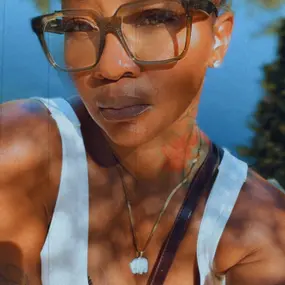
Founder, Compass Forward | Author & Domestic Violence Educator
Lanita Simmons is an author, domestic violence survivor, educator, and the founder of Compass Forward, an initiative dedicated to domestic violence education, survivor empowerment, professional training, and organizational consulting.
Drawing from her lived experiences with domestic violence, childhood trauma, and the challenges of rebuilding life after abuse, Lanita brings a deeply personal and practical perspective to conversations about coercive control, trauma, healing, and survivor autonomy.
She is the author of *The Life Nobody Prepared Me For: The Unspoken Realities of Life After Domestic Violence*, a candid exploration of the emotional, psychological, and practical realities survivors face long after leaving an abusive relationship.
Through Compass Forward, her books, educational resources, and advocacy work, Lanita challenges harmful misconceptions about domestic violence and encourages a shift from simply asking why survivors don't leave to understanding what they experience, what they need, and what happens afterward.
Her mission is to help survivors reclaim their voices while equipping families, communities, and professionals with the knowledge and compassion needed to create meaningful change.
