Your Authentic Self Is Waiting on the Other Side of Therapy with Linda Feig Knipe I Ep. 85


 Apple Podcasts

 Spotify

 YouTube

 Amazon Music

 iHeartRadio

 Deezer

 PlayerFM

 Podcast Addict

 Podchaser

 PocketCasts

 Castro

 Castbox

 Goodpods
In this powerful episode of 1 in 3, Linda shares her deeply personal story of trauma, PTSD recovery, and the transformative power of therapy after sexual assault. A casual comment from a professor unexpectedly triggered buried memories decades after her assault—forcing her to confront emotions she’d long mistaken for strength.
Rather than continue suppressing her pain, Linda began a courageous journey through trauma therapy that changed every part of her life. She explains how trauma impacts both the mind and the body, describing memory as “biology plus biography”—a powerful lens that helps listeners understand why traumatic memories fragment and later resurface as PTSD symptoms.
Linda’s description of the persistent “creepy feeling” in her back, which she came to recognize as dread from her assault, offers a visceral illustration of how the body stores trauma even when the mind tries to forget.
The conversation also explores what therapy really looks like, beyond the media portrayals. Linda opens up about her fears of seeking help—the shame, cost, and belief that “being strong” meant handling everything alone. She reveals how the hardest work of therapy ultimately led to the deepest healing: becoming her authentic self, finding love with her soulmate, and maintaining gratitude even after his passing.
For anyone living with trauma, questioning therapy, or supporting a loved one through recovery, Linda’s story is both validating and inspiring. Her message is clear: healing is possible through vulnerability, connection, and courage.
📘 Ready to start your own healing journey? Discover more in Linda’s book, Braving Therapy, and remember—you never have to face trauma alone.
Linda's Links:
https://www.1in3podcast.com/guests/linda-feig-knipe/
1 in 3 is intended for mature audiences. Episodes contain explicit content and may be triggering to some.
If you are in the United States and need help right now, call the national domestic violence hotline at 800-799-7233 or text the word “start” to 88788.
Contact 1 in 3:
- Send your emails to 1in3podcast@gmail.com
- Follow on Facebook, Instagram, and TikTok @1in3podcast
- Check out the website https://www.1in3podcast.com/
Thank you for listening!
Cover art by Laura Swift Dahlke
Music by Tim Crowe
0:23 Hi warriors, welcome to One in Three. I'm your host, ingrid. Trauma affects us all in different ways. Some of us bury it, while others face it head on. My guest today, linda, is the author of Braving Therapy, where she shares her journey into therapy and the lessons she learned along the way. Let's dive in to the importance of therapy and healing trauma. Please welcome, linda.
1:03 I'm looking forward to talking with you. Oh, I'm very much excited for this episode because I think there's a lot of relatable information that we're going to be sharing, not just for myself, but also for many listeners. But before we dive into that conversation, could you share a little bit of a background about yourself, just so the listeners could get to know you a little bit? Yeah, I am in upstate New York. I'm actually sitting in a little cottage that I have on Lake Ontario right now. I'm really resistant to leaving for the year because that means summer's over. So I grew up in this area.
1:47 I actually grew up in Summers on the Lake. I have a big, happy family and most of them have cottages or trailers around here. We're we're pretty just normal middle-class family. That was close, a lot of siblings, um. So I I will just start out by saying I don't know why, but when I was in high school I remember this, um I just felt really strongly that it wasn't fair that I had such a happy, loving family and so many people, um just kind of were twisted around, um, by what life had handed them, that I kind of were twisted around by what life had handed them, that I kind of made it.
2:32 I felt like my purpose in life was going to be to help people, you know, to help people kind of find their way, because I felt very lucky and then, as I went off on my own, I had a lot of difficult experiences. Life is harder than you think it's going to be when you're a kid for some of us and in my 20s I had a couple of really traumatic incidences and one of them was I was living alone in an apartment in Florida, very far away from my family, and my apartment was broken into and I was raped by someone I didn't know and because I was strong and tough, I just buried that and moved on with my life.
3:21 I got married, I had children, and then I had worked as a social worker. Children and then I had worked as a social worker and I went back to school. I was a Red Cross director too and decided to go back to school for counseling as in school counselor. So because my thinking was I was working with a lot of people who were making bad choices as a Red Cross director in a small chapter and thought if I can start helping people make better choices when they're younger especially career choices and things maybe people could have a better direction.
4:07 As soon as I went into the grad program, I was close to 40, and at the end of the first class on counseling theories we were talking about therapy and I asked a question and the professor made a statement about when therapy is worse before it gets better. Is in the situation where you have a rape in your background that you didn't deal with. And when you go through therapy it's going to be pretty hard for a while until it starts to get better. And that was my situation. I'd never dealt with it and I just I wanted to blink.
4:47 And we were sitting in a circle of about a dozen students and I was just telling myself don't blink, don't blink, they'll all know. And that started as soon as I left there. I started with post-traumatic stress disorder symptoms and they got to be severe. I had all of the symptoms that you've heard about for PTSD and finally I didn't know what was going on. I finally went back and talked to the professor a couple of weeks later. He explained PTSD and told me I was really going to need to see a therapist.
5:28 So that was the start of that's the beginning of the book going through that period, yeah, and I think that you and I have different stories but similar backgrounds, where I also have gone through my life thinking I am so lucky to have the amazing support of family and friends around me that just surrounded with love and you know, that's unfortunately not the case for everyone and I also did the same thing of when I left my abusive relationship. I thought I was okay, I'm a tough person, I'll, you know, buck up and carry on.
6:10 And it was not quite as long as you, but quite a while later before I realized that I was starting to show cracks of PTSD. So could you do you mind just describing a few of the characteristics of PTSD for those who may not be familiar? Well, yeah, so I'll tell you the characteristics of PTSD first, and then I'm going to explain a little bit about memory and how we store especially traumatic memories. But for PTSD there's lots of intrusive thoughts or re-experiencing.
6:52 So intrusive meaning they just come into your mind and you can't control them, which was one of the things that was driving me crazy, because I was I guess I was a pretty controlling person as far as my own thoughts and behaviors and things. I was very disciplined and it was like why can't I just put this out of my mind and you cannot. So you're experiencing, you experience sensations, you experience thoughts that you can't stop thinking about or you just re-experience what happened.
7:32 So that's one of the symptoms. Avoidance is another one. You just want to avoid anything that reminds you of the trauma and anything that might, you know, trigger any of those feelings again. And nightmares, all of that and I'm feeling like there is more that I'm not thinking of, because there is a list of like three main areas, but re-experiencing and avoidance and like nightmares and things are a big part of it.
8:13 And sensations I had very weird sensations in my body. And that's so important too, is paying attention to your body. I have found that my body will speak to me before my brain catches on to something that's not feeling right, yeah yeah, actually, I had this very creepy feeling in my back and it was very funny. It wasn't funny, but it was very interesting to me. It felt like my description of it to my therapist at the time was that it felt like I was standing with my back against a wall that had lots of spiders and bugs and snakes and everything, and that I was like right in front of this wall and I knew that they were all behind me.
9:05 And if you can imagine that creepy sensation and I didn't, and I would have that feeling in my back and I would just, I would be in a crowd at night and I would have that feeling in my back and I was just like I couldn't get rid of the feeling it's very creepy. And so this went on for months that I was, and it was interesting because, as because I was in a grad program and I had started with my therapist, my grad program was in counseling and counseling theory and all of that while I was seeing a therapist. So I felt like I was getting to watch both sides of it, like I would be watching him when he was working with me of it, like I would be watching him when he was working with me.
9:50 It took me months to figure it, to think about what it was, and I finally realized and I don't remember what the situation was, but that was exactly the same feeling and, if I explain this as you think about being a kid, when you used to sit around and tell ghost stories in the dark with your friends and you would feel that creepy heebie-jeebies feeling in your back and you'd want to turn around because it felt like that people would laugh at you, so you wouldn't turn around and you'd just sit there with that feeling in your back.
10:32 That's the feeling that I was having in these just normal situations. It was that creepy heebie-jeebies feeling in my back, but then I was having a very difficult time because you really start numbing yourself to emotions. Identifying emotions and identify the emotion that I was feeling as a physical sensation in my body is dread, and dread is the feeling I had had when this attack was about to occur and during the attack to occur and during the attack.
11:12 That's so interesting how you're able to tie those feelings years later to that specific experience. It took a long time for one thing, and the other thing was even. I mean, therapy was very hard because I was really resistant to talking about a lot of things, because a lot of my book is about shame and vulnerability and hiding things and being tough and not revealing our weaknesses. But I would be sitting in therapy going man, this is fascinating and this is happening to me At the same time that I can barely talk because I'm so anxious, but cognitively I was going wow.
11:55 You know, I have the same kind of brain and I was thinking the same thing like this is the craziest trip. Like I wish I was watching a movie to see all this happening instead of actually experiencing it happening instead of actually experiencing it. Yeah yeah, I didn't like the experiencing it, but it was an amazing, an amazing. Even thought that stuff that I had read about was actually I was actually experiencing it and I didn't have control over it. Yeah, that's crazy too, actually learning about it and experiencing it at the same time. So you asked a question about talking about PTSD a little bit and I said that I would go back and talk a little bit about memory.
12:39 So generally, when we remember things, generally when we remember things, there was a white paper that I read way back then because I was in grad school, I had access to the grad school library and so I was reading academic papers about this all the time, and one person described memory as biology plus biography equals memory. So the biology is the experience and the way we experience it, our sensations in our body, and the biography is the narrative that you put to it.
13:24 Cognitively, you combine the sensations that you had with the narrative that you put to it and you store it properly in your memory. And there's a part of our brain that deals with all of the really scary kind of stuff that you have to make decisions about right away. It's called the amygdala, and a professor, when she was describing it, said the amygdala is like the old Ernestine operator skits that they used to have on some shows, where somebody would call up and then Ernestine would plug it into the right place.
14:10 And that happens in the amygdala. It has to make decisions really quickly, and what happens with some people with trauma is it is the sensations and the whole trauma is so uncomfortable to think about. That you don't think about. You shove the sensations away really quickly without any narrative to them, and so actually those sensations are shoved away with other kinds of memories, things that were happening around the same time. So that's how they come popping out when you don't have any control about them.
14:54 If you had memories that were properly stored, with the narrative and stuff, you would have more control over those thoughts. But when you just shove away sensations without putting any narrative to them, it's like something that's misfiled in a file cabinet and you go to pull out a file and all of a sudden this weird paper comes out that just got stuck in there. So that's how the PTSD symptoms kind of keep coming back out when you don't want them and in the strangest times. Okay, and that explains also why some people are, you know, able to carry on with their life.
15:49 For, however, although as I was in my therapy, I realized how insidiously that protective feeling is like you just are much more controlling in your life. You kind of shut down your emotions, are much more controlling in your life. You kind of shut down your emotions because all of that feels kind of unsafe. You feel like you need to keep things into control. When I first started my grad program and it was a summer class there were only a dozen students in the class and I remember two of us in the class were very cognitive thinkers and everybody else in the class was kind of more emotional in their responses and we felt just the two of us you could tell by the way we were talking we felt very superior for just making decisions cognitively.
16:40 But through the class I started realizing that I referred to my emotions in the third person. Like I couldn't even claim an emotion I would say it's a feeling of being uncomfortable, it's a feeling of having a creepy sensation, it's a feeling of being sad. I didn't even say I'm sad and as I was going through the class I started going wow, what's the deal? And I said that to my sister and she said, wow, I always am examining my emotions and I said I never thought about it. But when I realized that when I'm describing how I feel about stuff, I describe it as a feeling that I don't say I feel and that's a real numbing kind of I'm afraid of emotions.
17:34 I don't even want to claim them always find it easier to describe somebody else's emotions than my own. Or if I actually in therapy, when I was talking about my emotions, I was referring to myself in a past tense, so, like you know, younger me. And that was okay, but it was difficult for me to say myself yeah, you can't claim it yourself. And the other thing that I realized and I thought it was just an empathic, I thought it was just me being empathic, except that this doesn't happen to me much anymore is I would feel very deeply emotions that I thought other people were feeling.
18:22 So if something happened to somebody, and oh, so during that time or before that time I wrote about this I think it was probably early in my therapy I had three little boys and there was a mother who had been in a car accident with three little boys and they had all been killed, I could not. I was so overcome with grief because I was feeling the grief that I imagined she must be feeling, and I was so overcome with grief that I almost couldn't function.
19:04 And I used to do that just about everything that I imagined people were feeling, and I don't do that anymore. I was the same. I mean, it would be something simple, Like if I saw somebody eating lunch by themselves. I created this narrative that they didn't want to be by themselves and I felt so sad for them, Like did they lose? somebody. Yes, they must be so embarrassed and alone. Yes, oh my goodness, and it didn't even occur to me that maybe they really needed to get away from all the people. Actually, yes, my sister is an LCSW and I've told her about this and she said you know, some people actually just want to eat by themselves.
19:48 Yeah, yeah, I'm deaf and when I'm alone, please don't come up and talk to me. Okay, I'll keep that in mind. Okay, so what? You know, what prevents somebody from moving on when they are stuck sort of in this cycle, either of recognizing some of the features of PTSD or, you, you know, still ignoring or not ignoring, but, you know, bypassing that well, I think it's really easy when you're not suffering from the craziness of ptsd. I mean, once ptsd surfaces you're gonna have to do something about it, you know, because maybe you can wait it out until it gets buried again.
20:37 But for me it went on for five years. So you need to deal with it and you need help with that. It's not something that you can just tell yourself. I can control this, put it away. And the reason is because it's very uncomfortable to talk about trauma, like people who've had trauma I mean for military people. You know, actually they've developed many different therapies for military people because going back and talking about that stuff is so awful that it's re-traumatizing.
21:22 But for my situation, being able to talk it through and being able to start understanding the emotions that I was feeling at the time kind of released those emotions that I had buried and I had just become super numb as far as being an emotional person was concerned, I was still kind and I felt good stuff, I felt love for my kids and things, but I didn't feel a lot of negative emotions and I think they would come out in kind of controlling ways, like I would try and keep everything under control so that I didn't have to deal with them, and I'm thinking you need to go back to the question because I think I got off track.
22:33 Well, you did kind of cover it. It was. You know what prevents people from moving on. So obviously when they're showing the signs of PTSD, there's sort think. I want to see a therapist Because and most of my book is I don't know if I wrote a book about breathing therapy and it was about this journey of like seeking of realizing I needed to get therapy after almost 20 years and seeking it and all of the things that I had to overcome when I was thinking about therapy.
23:23 And it was funny because my oldest son, who was a great, he was a very good sounding board for me and he said you need to include a chapter, or at least write about all of the reasons why people don't want to go to therapy, because he'd been through that himself and his. You know people that he knew and you well, first of all, you think you can handle it yourself, or you can, you know, talk to friends, but you don't want to talk about things. There are certain things you just tell yourself you're never going to talk about, because those are the things that are the skeletons in your closet or the things that you hide, and you just, even if you went to talk to somebody, you wouldn't talk about that stuff, and my fear was that maybe they would somehow know how to get that out of me, and so that created fear.
24:23 There are practical fears like how am I going to fit it in, how am I going to pay for this, how am I even going to find the right person? Everything in my head is such a jumbled mess I don't know how I'd ever start talking about it to begin with. And then what if it's the wrong person and I have to go find somebody else? All of those things, like everything that you can think of that you're creating an obstacle for yourself about therapy will come up.
25:08 And there are, when you're thinking about it, things like worrying about other people finding out you're in therapy. Well, who's going to tell them unless you tell them? Because the therapist can't tell them. And and honestly I will tell you that I know people in positions that people do go and talk to bartenders, things like that, and they do talk. So if you want to be able to talk to somebody, if you're using somebody because you need to let down, find a therapist because they are the one person that can't talk about what you're saying Everybody else. If you go and talk to somebody, you have no idea who they're going to tell.
25:53 So, worrying about that, worrying about finding the right therapist, what I have said is it may seem like a jumble in your head, but you'll know you're talking to the right person when you're talking about the right stuff very quickly. Different organizations that you can go to. There are mental health associations and things to be able to pay for therapy, and now they're doing therapy online so you can fit it into your life. There's always a solution to all of those, but the big one is worrying about talking about stuff that you don't ever want to reveal, and a good therapist lets you make the decision about what you're going to talk about.
26:50 A good therapist is not going to direct you. They're going to help you talk and, honestly, if you go to somebody who directs the conversation, then you probably need to find a different therapist. Yeah. So I have a few things I wanted to mention, but directing the conversation is a big one, because there were times I would go into my therapist and I would say what should I do? And she would look at me. She's like okay, ingrid, we need to talk about this, let's process through, you know whatever. And I'm like no, I just want you to give me the answer, I just want you to tell me. I just want you to fix me. Yes, so I know a few reasons that people don't want to go to therapy is like you mentioned what are people going to say?
27:38 I do believe that, at least today, the stigma of therapy is not such a prevalent thing anymore. People are more open in talking about mental health and going to therapy, so that's a really nice thing. That's happened over the years. And regarding people who talk, that's bartenders, yes, people who cut your hair I mean my therapist, the girl who cuts my hair. Sometimes I would go in and I said so, hey, I haven't seen my therapist in a couple you know, couple weeks, so I'm going to unload on you quick, because you're therapist number two. But yeah, they will talk, they absolutely will talk. And another thing that I wanted to bring up that is as recent is chat GPT.
28:22 Apparently, a lot of people are going to these AI tools and using AI as their therapist, which, surprisingly, I heard about this and I plugged you know just a made up story into ChatGPT and it gave pretty decent advice. But something to keep in mind is one, it is AI. Two, if you speak with a therapist or if you speak with an attorney, they're held to their client privileges and HIPAA laws for you know, therapists. But ChatGPT is not HIPAA laws, for you know therapists, but chat GPT is not.
29:02 Yeah, the other thing that would really terrify me with chat GPT is we still don't know which direction it's going in. Yes, and there have been times when it has told I've heard some stories about things that it's told young people to do. That are terrifying. I mean, you're talking to something that doesn't have a conscience. That's pretty terrible. Why don't you just kill yourself, right. So I did want to bring that up, because that's not a good alternative to actual therapy? No, you don't know what you're getting. You don't know what you're getting. Exactly, and another good resource is I know your story is not again the same as mine, but domestic violence.
29:59 A lot of domestic violence agencies out there do have resources available for individuals if they need assistance with therapy, that you are able to get therapy through those organizations. So that's a good place to check out Right therapy through those organizations so that's a good place to check out Right. And there are a lot of rape crisis programs that are available that will provide counseling. It may not be long-term, but for things like rape crisis, the quicker in any kind of therapy, the quicker you get it, the less you've kind of internalized all of that trauma and let it get mixed up in the way that you just function in the world. It's a little easier to parcel out and take care of it. So, yes, it's well worth it and take care of it.
30:41 So, yes, it's well worth it. Another common theme that comes up is when dealing with trauma is control, and I think, regardless of whatever kind of trauma you've experienced if it's you mentioned war trauma, rape, trauma, domestic violence, trauma, any kind of trauma, a car accident sort of trauma you don't have control of that situation. So naturally, following the incident, your brain may want to somehow grab onto it or you may consciously say I need to control this narrative. I was not able to control that in the past and I mean that's like I said, it's a common theme that I've seen is trying to control the narrative. Yeah, I was going to say I think the control thing also has to do with avoidance and one of the ways that that part of your brain works, the amygdala, and they call it the amygdala attack.
31:34 But we are on the lookout for threatening kind of things and when you're in that state where you're trying to control everything, a lot of things look like a threat that aren't necessarily a threat, but a lot of things look like a threat. And the amygdala was the part of our brain that is on guard to keep us alive. I mean, that's ultimately in our reptilian brain. That's how we were kept alive, as it was on guard against threats. And then, the minute that it perceives a threat, it does things like you will start to hyperventilate, your eyes might dilate, you feel your heart rate increase.
32:27 Well, those are all things that are going to help you to either fight or escape. To either fight or escape. So the heart pumping blood faster, which you can feel, your heart pounding is pumping blood into your muscles in case you need to run or you need to fight, and the hyperventilating is oxygenating yourself and your eyes dilating is so that you can see things better. So your brain is responding in a way to protect you. The problem is, a lot of things aren't threats really anymore. You start perceiving so many more things as threats.
33:09 So that's one of the reasons why PTSD feels so crazy, because you can't control the reptilian part of what your body is doing to protect you. Right, so okay, so we've talked about why people need therapy and why people stay away from therapy. So can we talk a little bit about actual therapy, because that is some difficult work and I don't want to say, you know, emphasize the difficult part, because I don't want to steer anybody away from therapy, because it is an incredible experience, but it is a lot of work.
33:53 Yeah, so I will say that, as hard as therapy was, while I was in it, I was thinking to myself this is the hardest thing I have ever done, but I'm growing more than I have ever grown at any other time in my life. Like going through something that difficult, I learned so much. I became the person that I always wanted to be. I am much more authentic now than I ever was before. It was the most difficult experience, but the best experience of my life.
34:39 Yeah, there's something else that I was going to say about that, but I will. So I'm the kind of person where you know we talked about being strong that I want to tackle things head on. So when I started noticing the little cracks in my exterior when I went into therapy, I said this is what's going on, let's get to it, let's. This is what's going on, let's get to it, let's jump in and take care of it. I want in and out. You're fast, me too. Me too, in and out, and it was not fast. And actually when we started the conversation, actually I wanted to talk about that quick too. I did not.
35:19 I had not done therapy before and I wasn't sure, you know, I had seen things on TV. Am I supposed to lay down on this couch? What am I? You know what's supposed to happen? And it was really uncomfortable. I sat down for a minute and I said I don't know what to do. I'm not sure what I'm supposed to do. And she was just like this is your time, whatever you want to do. And I said, all right. And then I get almost the same conversation. Yes, it was just a really comfortable. Yeah, don't make me talk, right. And so I just was like looking around. I was like, so I mean, today I just started like talking about my day and then eventually she definitely was the right person for me and I was able to start opening up.
36:06 And then that's when I jumped in I said, okay, this is why I'm here and I want to get this taken care of. And as we talked more to try to figure out the right modality to get to the root of my trauma, we discovered other pieces that played into it too, and things that that you said. Like what you mentioned, you became your more authentic self, and here I am in, you know, older age. I was like I wish I would have known these things about myself when I was 20. And it's really incredible how this word is overused, but I don't know what other word to use is empowering. It really is because you start to understand yourself and you start to recognize things that you never recognized about yourself before.
36:54 So let me say, when I've done author talks, it's so interesting. So I wrote this book because not because it was therapeutic for me I was a counselor. I used all of the information. I channeled my therapist, my psychologist a lot when I was working with students because we did a lot of personal counseling. So I had a very purposeful life after that. But I didn't feel like I was done with the experience until I passed along the learning, which is why I wrote the book. I just needed to pass along that learning because even when I was sitting there I was like, oh my gosh, I am changing so much.
37:43 So that was a big goal of the book. But when I do author talks, I will see people sitting in the audience. I'm talking about things that you won't share because there are certain things that you keep to yourself. There are things that you berate yourself about and just like things like how could I be so stupid to do that?
38:24 I won't do that again. You won't talk about that stuff to anybody else because it embarrasses you. And I was talking about that for myself, because that was one of the things that made it difficult to go to therapy is I knew there were things I did not want to reveal and I see these accomplished people in the audience shaking their heads. Yes, when I'm talking about the stuff that you keep to yourself, that you berate yourself about and ruminate over, you know how could I do that and try and figure it out yourself. And my message is that that stuff is toxic.
39:06 That when you are holding stuff inside that you won't talk about, you do not let yourself be vulnerable. That that is toxic. Shame is toxic. That when you can reveal that, you really discover how much we have in common, because everybody's got that stuff. And what feels great is to finally talk about something that you are so ashamed about and somebody goes oh yeah, that happened to me and this is how I've, and like, suddenly it's not so bad, but when you keep it to yourself, it becomes terrible and it causes anxiety and it can cause depression.
39:52 And there's a psychologist that has a podcast and a newsletter, dr Margaret Rutherford, who calls it perfectly hidden depression. And it's accomplished people who will not reveal those things they ruminate about. And that was keeping me also out of therapy. Like until I had to go, I was not interested. Same and therapy is. It's like a purge right, you're getting all of that out and it's in a non-judgmental space.
40:34 I do have to ask you, Ingrid, how long were you in therapy dealing with the? trauma. So I initially went, I only did like three sessions. I'm like I'm good, but then that's when I formed my little bubble that I was okay, and then I went back and it was a year and a half. That was super, super intense. I mean, we did EMDR, which is, you know, if that's something that you're going to do. I would have loved to do that my therapist. It was early on in the EMDR and he was like I'm not sure about that. Yes, it was incredible. The things that that's when I was talking about.
41:17 I felt like I was watching a movie. It was, it was. It was just incredible. My, my brain is very vivid. Go ahead. Let me say EMDR. For your listeners, it is eye movement, emdr, eye movement. Oh, I just knew it. I always miss it? Oh, it's eye movement, desensitization and reprocessing. So it is the same kind of eye movement that happens when you're dreaming. Your eyes go back and forth and it's like you're watching a movie, but you can do it without feeling the sensations in your body, so you're able to actually reprocess that information and trauma, being desensitized to it.
42:08 You desensitize and then reprocess. Yes, it's. You know that you are in a safe place, you are in the present place that you are and you're able to you know, if it starts to become too vivid, you're able to return back to that place. And it was wild. I had crazy dreams. Some people have nightmares and I've always had really vivid dreams. So perhaps I had nightmares, but it just wasn't that big of a deal to me. But it was really strange because things that were sort of repressed started surfacing. So there was a song that I had really liked prior to doing a few sessions of EMDR and then all of a sudden I heard the song on the radio and I was like, oh my gosh, I can't listen to this right now.
42:57 And it was weird because it uncovered something. But it was the emotions that I went through. I mean, there was some ugly crying happening, there was anger, there was an at the end, just the like. I said, I did it twice. The second session I did this release that all of a sudden happened was like you know, I have this giant smile on my face sitting on the couch and I was like, oh my gosh, this is the most incredible, liberating feeling I've ever had and it was just amazing.
43:38 And if somebody does want to do EMDR, it is intense and you do have to make sure you have a practitioner that really knows what they're doing and is properly trained with it. So, because it sounds so, if people aren't familiar with it, can you describe and I only know it by description is like they use their finger or a pencil to go back and forth and you just watch it to make your eyes move back and forth. Yes, so my therapist sat in a chair across from me, not too close but not too far away, and I sat on the couch and she just did this with her hands, really slow at first, and then she would change the speed.
44:26 Yes, and so you're watching it back and forth and I think some may use like a metronome or some sort of a sound effect as well to keep that pace of that TikTok back and forth. And so we just do that and we start talking about the memory. What we did is we, after talking, before we started actual therapy, we came upon one specific memory that I would go to, and so we went to that specific therapy and just talked about it, like describe where you are, describe what's happening, and it just like took me, took me in there, where there was, you know, like I said, the first hesitancy of my first visit of what do I talk about?
45:11 What am I supposed to do. It just started coming pouring out. Sometimes there wasn't much, like you know, she would say what's going on? I'm like I don't know nothing really, and so we would just sit and continue doing it until something came up. It was really interesting. I didn't. I knew a little bit about it before we started and enough to make the informed decision that I wanted to do it. But I also did not look too far into it because my brain is also something that would put up a block of. Okay, I know, this is what's supposed to happen next and I'm not going to let that happen. Yes, exactly, exactly. That was.
45:52 That was the whole thought process, and I told her. I said please don't tell me too much, because I don't want to to like block this, and I feel like I will. And at first I was like this is really ridiculous, I can't believe. I'm sitting on a couch, like you know, looking back and forth, and all of a sudden I was like this legit worked for me, and I'm not sure if that's a, you know, a modality that works for everyone or that is for everyone. No, I think it's very effective though. Yes, yes, absolutely. So we were talking about therapy and I know that's a really important thing for people to understand what it is. So I wrote this book, and I wrote this book for people who had had trauma to understand that it's not only important to pursue therapy but to stick with it, that you need to stick with it through the end.
46:46 So I was in therapy for five years really working on this, and the reason is because I had a couple of things I was never going to talk about. One was a date rape that I never even identified as a rape until well into therapy, and I was so humiliated by it that when it happened, I said I'm never going to think about this again. I'm never going to. I said I'm never going to think about this again, I'm never going to admit it, I'm never going to talk about it, and I couldn't, and that was one of the things that kept me out of therapy. The other was that my marriage was in trouble. We had a lot of difficulties between us and within the first month or less, my therapist had said to me well, we haven't talked about your marriage, it'll be good to talk about that next time.
47:33 And I said to him my marriage is just fine, we don't need to talk about that. And so he made a note and now, 20 plus years later, he says, yeah, I remember when you said that and I was like, oh, that's a problem. And I was so afraid that if we got into those things, that life would change and the date rape was humiliating for me. So I just did not want to even create a visualization about that for anybody, create a visualization about that for anybody. And my marriage. I was really afraid if we started talking about it, that my marriage would end. So that stuff. There would be sessions because it's like you said, a good therapist is going to let you lead because you need to keep control.
48:22 When you've been in a trauma, you need to be the one in control. If somebody is leading you around, you are not in control and you're probably not going to stick with that and it's probably not going to be that helpful. But it took me a very long time because one of the things that I, when I was sitting in therapy I mean one of the things in my head was, if I start the conversation, then he's going to know what I think about, and I wanted to be able to control what other people thought about me. So I had a very hard time starting the conversation and the only time he would really step in and take charge was when I said I need help.
49:05 And if I said I need help then he would help me start talking. And you know, as soon as I started talking, the conversations would go to areas that were important and they may not. They may never have been about the rape. I always felt like we should be talking about that, but there was so much in the 20 years almost from the time I'd been raped that I kind of twisted around and you know it was like my feelings about things, the way I related with people, all of that. So so those were the conversations of therapy. And I know one person said in the reviews I have about 75 to 80 reviews on Amazon and Goodreads and I said that I wrote the book for people who had had trauma, but what I discovered was that the book I sent the book out to a lot of people to read it just because I needed to get reviews, and then a lot of other people started reading it.
50:08 A psychiatrist said this really reveals what's going on in the mind of your patient when you're struggling with getting them to talk. And there's a lot of time that I was depressed and I talk a lot about depression and a lot of people resonated with that. A lot of people resonated with the holding stuff to themselves and not realizing how toxic that is. So all of those parts of it not the trauma or the rape, but the therapy and the way we change perspectives and how healing it is to talk with somebody and get out your emotions resonated with everybody.
50:52 Because what I did is in the majority of the book. I wrote about what was going on in my head when I wasn't talking and why I wasn't talking, and arguing with myself about why it was so hard for me to say anything and changing my perspective. And part of the perspective change was my conversations with my therapist, ryan, and part of the perspective change was that I wrote in a journal all of the time and I would talk to people just about how I was experiencing the therapy friends of mine or my sisters and perspective changes that came from that.
51:36 And my former husband, my ex-husband, who is the father of my boys. I was married to him for 20 years and at the end of really while I was going through therapy. We both went into therapy and realized that we were a mismatch. We both had trauma issues and so we did split up. But my husband and I would talk about it quite a bit, and he described he said two things that have I put them in the book, I think, because they so resonated with people. First is that you go through your life collecting garbage and keeping it in a bag that you drag around with you in your life and that's like all of the trauma and stuff you don't want to think about or talk about, but you keep it in the bag and you just drag it around, like dragging a garbage bag everywhere you go.
52:30 And then you meet the person that you want to go through life with and you each have your garbage bag full of stuff and you take it and you dump it over your partner's head and I was like that is such a wonderful description of what we do. Yes, and the other thing he said about therapy because he got a therapist too is that a therapist is like I was, the same way I was like I just want you to fix me and I just want you to tell me what to think or what to do or what to talk about. And he said being in therapy is like going through a jungle with a machete and your therapist is behind you telling you what to cut.
53:12 So your therapist isn't leading you through the jungle, your therapist is just behind you and, as you're seeing branches and areas that are all thick and it's that chaotic, like there's just so much crap in your head and the therapist is telling you where to cut. I love that analogy too. Those are both great analogies. Yeah, yeah, and that's a lot what therapy is like and that's a lot what the therapeutic conversation is like. You come up with the topics and your therapist will maybe restate what you said in a different way and maybe with emotion, so that you can hear it.
53:56 Reflective listening, which good therapists will do a lot is if you say something, they will repeat it back to you with emotion, like it sounds like you just said blah, blah, blah, and it sounds like it was very upsetting for you and you may not have realized it was upsetting, but that allows you to go deeper into that said. You know, I've always been afraid of therapy because you know, you see what it is on TV where people are asking you how you feel and that's the last thing you want to talk about is how you feel, and that is not. That is not how it is.
54:37 No, you're totally correct on that, because my therapist would. You know, I laugh actually a lot. I still go to therapy because doing this podcast I was like I'm not doing this by myself, like I need to make sure that I'm talking about not necessarily conversations, that anything that I put out on the podcast, you know, is obviously it's out there. But if there's private conversations I've had with guests I don't talk about that. Obviously it's out there. But if there's private conversations I've had with guests, I don't talk about that. But I just want to make sure that nothing else bubbles up and I want to keep myself as grounded as possible and just open and I love continuing to learn about myself.
55:19 And there's times I go in I was like so nothing's happened, I don't go. I think I go every two or more weeks and sometimes it's like there's nothing that's really happened and so we just start talking. She's like hold on a second, can we? Can we go back to what you just said? And then it's like, oh yeah, you're right, we do need to talk about that a little bit more. Yeah, it was funny. I see my therapist maybe once or twice a year. Now it's been 20 years and when I was writing this book we met a couple of reasons. I put a lot of words in his mouth because the book is a lot of dialogue. It's a lot of, it's not just a story I told and I wanted to make sure, as I was putting words in his mouth, that I was being true to the conversations that we had.
56:08 And his concern was that when I got into talking about the book and things that it wouldn't be re-triggering and we talked a lot about that but I don't see him all that often he did send me notes. He sent me a lot of his notes from when I was in therapy and I included some of them in the book so that people could see what it is that they're writing, which isn't a lot, but it's enough to keep them on track. I did the same thing. I went to him this spring because I was really struggling with marketing the book and talking about depression and I was getting down.
56:54 It was just a lot and we had a great session and then he set up another one for a couple of months down the road just to make sure I was doing well. And then I was like I went in and I was fine and I said everything's been fine, I've had a great summer. And he said, well, what was going on that you let yourself get so depressed and you didn't talk to anybody. And I was like, because I know better, and I was just I don't. Okay, this is what was going on. I cannot. When it gets to be chaotic still as healthy as I am when I get chaos in my head and get depressed, I cannot say to somebody I need to talk, I can't, I need to talk, I can't.
57:42 But what I realized I could do after I went to him the first time was I could do something. I call it throwing your hat over the fence with a text. And so I said to my two best friends who I was going to be seeing the next week I've been really depressed. I just am really struggling right now. So that when we were together and they didn't jump on it, they were wonderful about it, but they gave me space to talk and they already knew it wasn't that. I had to say it face to face, and that's something that I had discovered even in living a healthy life is when I start feeling depressed, or if something has embarrassed me.
58:25 I still can't just say it, but I can send it out there in the universe in a text or something like that, and then that can help me over the hump. Yeah, I find that for me, I have difficulty asking for help and saying that out loud like I need help, and it could be with you know whatever variety of topics. So let's talk about your book, braving Therapy. So it takes us on the journey of prior to therapy in therapy yes, and then okay. The majority of the book is in therapy. I mean the beginning of the book. The prior is just the setup of what happened to me and I was very careful writing what I wrote about because I didn't want to trigger anybody that the book could help, because the primary goal of the book was to kind of be a companion for people who are in therapy.
59:19 So it is laid out. The therapy section is laid out by sections. I talk about trust. Well, I talk about seeking therapy and pursuing therapy and just what it's like, what the conversation's like and journaling and the struggles that you have with trust. There is a chapter about that and I didn't realize that I didn't trust and it was a huge issue. There's a chapter about depression and suicidal ideation and all of that. It's not just things that I went through, but I also was a companion for students who were going through it when I was a school counselor and I would explain, I would work as their companion, and that's kind of how I wanted to lay out the middle of this book to be a companion for people in therapy.
1:00:07 And it goes right through. It's partly a companion of explaining things and partly a. This is how kind of stuff you can expect. This is how you heal, because as my perspectives changed and I talked all the way through it about what I was thinking and how my perspective really changed, which was healing but I go right through depression and then the worst of it, which was when I finally talked about that date rape, and then the things that I think about just in our society that put us in a position where it's easy to get into those situations.
1:00:53 And then the last part of the book is the promise Like when you stick it out, life changes, your life changes and the change that I was afraid of my husband at the for over 20 years to this wonderful woman and I met the love of my life, who was my soulmate, and we had a wonderful 15 years together and when he died and when he died I kept expecting that depression would come back.
1:01:43 I kept expecting that the depression would come back. But the other thing that happened to me through all of this time is I started to develop a real feeling of gratitude for my life and what I've already got. And when Bob died I still just felt so grateful that I had had him in my life. He was kind of the last piece of my healing, because he taught me that I was acceptable, no matter what I thought about, that he loved and accepted me, no matter when. Stuff that I would start to try and bury, and he wouldn't let me bury it because I'd start to go flat, which you recognize as the like, you start turning off your emotions and everything and he would help me talk about things and make me realize that I am acceptable and lovable and that was like the final piece.
1:02:41 And I'm just so grateful for that. Well, and then, like you said, through therapy, you got to become your authentic self. So it's like your authentic self is living this, actually living your life with the love of your life, which is beautiful. So your book you mentioned it's on Amazon and Goodreads, it's on Amazon and Goodreads. You can get it in any bookstore. It's on Barnes, noble. So wherever you get your books, you can order it or possibly buy it. It's in some libraries. And I'll include all of your links in the show notes, but do you have any specific links that you want to share with listeners? So I will have and I'm not sure if they're up there yet, but I for that would include, like the overcoming objections to therapy, what to expect in therapy, how to find a good therapist, those kind of pieces of information that people can just have sent to their emails.
1:04:01 So that will be up there. And yeah, I'm on Braving Therapy. Alphide Naip is on Amazon or Barnes and Noble. You can find the book there we both said it's a pretty quick read. Okay, perfect, it's on my read list. It's on Kindle. Yeah, it's also on Kindle. Okay, and so, finally, linda, I believe that every story carries strength, and what is the strength or message that you want to leave with listeners? Oh. I think the big message is it's my philosophy of our life here on earth too but my trauma and your trauma, you know people may say, oh, that was awful and it was, and I wouldn't wish it on anybody.
1:04:58 However, everybody has really really hard situations that they go through in life. Everybody. Everybody has things that they would rather just bury. Well, there are some people that talk about everything, but I think some people that talk about everything do that. So, and whatever you're afraid of being vulnerable is what causes connection. That is what connects you to people and makes you feel like life is worth living and you're not alone.
1:05:46 But I guess my message is we all have hard stuff and it might just be drama in your life, but it is kind of trauma to you and you need to deal with it. Please don't bury it. And the other part of it the reason I wrote Braving Therapy is when you go into therapy, when you've got a good therapist, don't just go and stop. Stick with it until you are all the way through, and I kept wondering what that was going to look like when I was in therapy, but you'll know when you're all the way through.
1:06:28 It's transformative. It really is, and thank you, linda, for joining me today, thank you for your book and thank you for all of this information, super helpful information for all the listeners. It's been a real joy talking with you, ingrid. It really has. I really enjoyed it. Thank you, okay, take care. Thank you again, linda, for joining me today, and thank you, ingrid, it really has. I really enjoyed it. Thank you, okay, take care. Thank you again, linda, for joining me today and thank you, warriors, for listening. I have included the links Linda was referring to, as well as her one in three profile in the show notes. I'll be back next week with another episode for you. Until then, stay strong and wherever you are in your journey, always remember you are not alone.
1:07:10 That's the number one. I-n the number three podcastcom. Follow 1&3 on Instagram, facebook and Twitter at 1&3 Podcast. To help me out, please remember to rate, review and subscribe. 1&3 is a .5 Pinoy production Music written and performed by Tim Crow. ©. Transcript Emily Beynon.
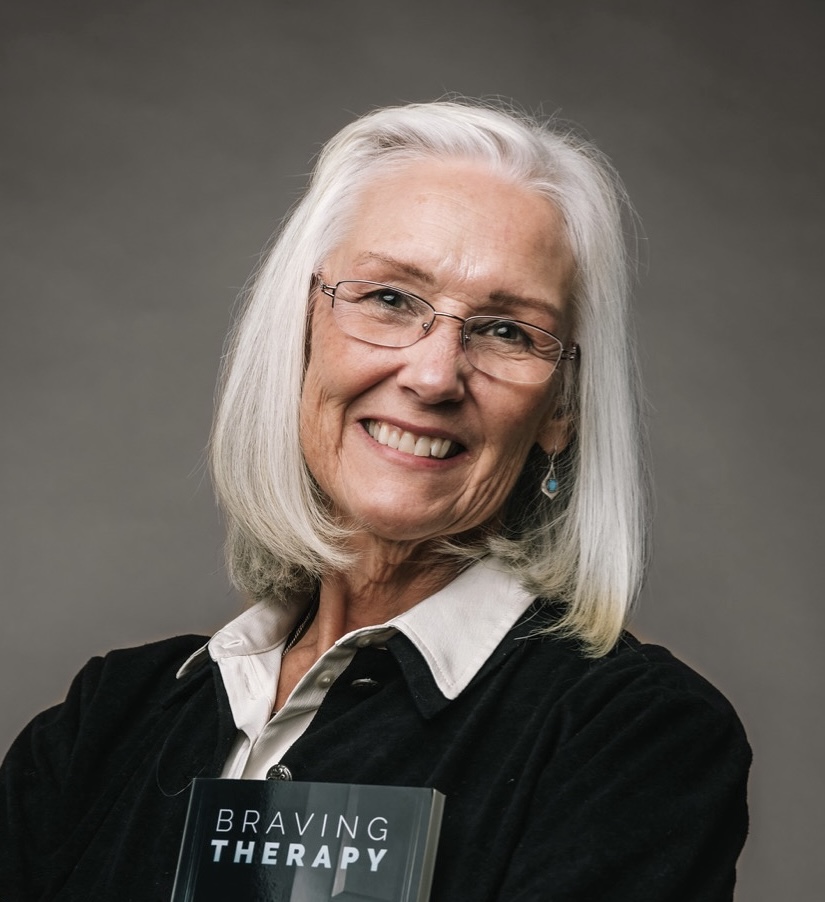
Author/Trauma Survivor
I hold a Master's Degree and Certificate of Advanced Study in Counselor Education from the State University of New York at Buffalo preceded by a Bachelors Degree in Psychology from SUNY Potsdam. My careers prior to counseling were in social work and as a Red Cross Executive Director. I also spent several years as a trade magazine executive. I have traveled extensively and am an active volunteer and leader in my community.
I am also survivor of rape.
For more than half of my life I held the common misperception that burying feelings and soldiering on is a healthy and desired means of showing strength. I discovered in my first Counselor Education class at the age of 40 that perhaps I was mistaken. I was provoked into full blown PTSD symptoms.
This is background. The real story, purpose and value of my book, Braving Therapy, is how we overcome adversity. Life is hard. Life has its ups and downs, but when things are really tough and we can persevere through it, we learn. This book is about using the tough times of life to learn and grow, to be more authentic versions of ourselves. Braving Therapy is about reaching out and getting the help we need. Facing ourselves, our perspectives, and how we have functioned up to now in order to get by takes courage. Getting help through therapy requires vulnerability, but it can be life-changing for those brave enough to persevere through it.
My passion and purpose in life has always been to lift others up. When I needed it myself, and finally let others in, they lifted me up.
