Recognizing Emotional Abuse: Antoinette Foxworthy on Toxic Relationships and Survivor Support (Part 3/3) I Ep. 52

How can you recognize emotional abuse before it escalates? In this episode of the 1 in 3 Podcast, Ingrid welcomes back Antoinette Foxworthy to explore the often-hidden world of emotional and psychological abuse. Drawing from her research, personal experience, and her book No More, Antoinette reveals the subtle tactics abusers use, from isolation and manipulation to gaslighting, and provides tools for identifying these behaviors early. Together, we discuss: Warning signs of emotional and...

 Apple Podcasts

 Spotify

 YouTube

 Amazon Music

 iHeartRadio

 Deezer

 PlayerFM

 Podcast Addict

 Podchaser

 PocketCasts

 Castro

 Castbox

 Goodpods
How can you recognize emotional abuse before it escalates?
In this episode of the 1 in 3 Podcast, Ingrid welcomes back Antoinette Foxworthy to explore the often-hidden world of emotional and psychological abuse. Drawing from her research, personal experience, and her book No More, Antoinette reveals the subtle tactics abusers use, from isolation and manipulation to gaslighting, and provides tools for identifying these behaviors early.
Together, we discuss:
- Warning signs of emotional and mental abuse
- How to support friends or loved ones in abusive relationships
- Practical strategies for offering help safely
- Understanding isolation tactics and controlling behaviors
- The critical role of education, empathy, and survivor-centered advocacy
This episode emphasizes the importance of being a compassionate ally, setting boundaries, and believing survivors. Listeners will leave equipped with actionable advice, awareness of resources, and insights into creating a supportive environment for those navigating abuse.
🎧 Key Takeaways:
- Recognizing hidden signs of emotional abuse
- Practical guidance for supporting survivors
- Safe ways to offer help and resources
- Understanding abuser tactics and manipulative behaviors
- Building awareness and advocacy in your community
Antoinette’s bio: https://www.1in3podcast.com/guests/antoinette-foxworthy/
Amazon link to purchase "No More": https://a.co/d/cfsgEOy
1 in 3 Podcast Playlist: https://open.spotify.com/playlist/5jUACPkUdCXmwvdPh6v0TO?si=26NxiUUgRDmz6mqlyQv6Ug
1 in 3 is intended for mature audiences. Episodes contain explicit content and may be triggering to some.
If you are in the United States and need help right now, call the national domestic violence hotline at 800-799-7233 or text the word “start” to 88788.
Contact 1 in 3:
- Send your emails to 1in3podcast@gmail.com
- Follow on Facebook, Instagram, and TikTok @1in3podcast
- Check out the website https://www.1in3podcast.com/
Thank you for listening!
Cover art by Laura Swift Dahlke
Music by Tim Crowe
0:23 Hi Warriors, welcome to One in Three. I'm your host, ingrid. Today I'm happy to introduce for the third time Antoinette Foxworthy. She is the author of the book no More. She explained in her first episode what led to her writing the book. In part two she read excerpts of no More and in conclusion, today she discusses abusive behavior and what victims, survivors and advocates can do in response to violent relationships. Here is Antoinette. Welcome back, antoinette.
1:05 I'm happy to have you again. Thank, you. It's wonderful to be back here. And today we're going well. You're going to go through some information I think will be very helpful to the listeners after hearing why you wrote the story and hearing parts of the story, and then now taking all of that information and discussing what's helpful for either those who are in domestic violence situations or those who know someone that is. Perfect. That's exactly what I'd like to do, because sometimes I think we don't give people enough information about what do you do if you find out someone is in that situation.
1:45 So with all my research, I got some ideas. What I'd like to talk about is what I learned through all my research and what we can do in situations, and I wanted to focus on a couple things. One, the first thing is emotional and mental abuse, because I think we all know what physical abuse is, but sometimes it's a little bit harder to differentiate what mental or psychological abuse is. And then I'd also like to talk about what you can do if you suspect someone is in an abusive situation or they've told you that they're in an abusive situation. So you remember I did a lot of research on domestic abuse when I wrote my book no More, and when I thought I was going to go on a book promoting tour, it morphed into speaking engagements and lectures and talks about domestic violence, and that's where I got a lot of the information as well as my research.
2:47 When I talked to women at the speaking engagements, I asked how do they think they got involved with someone who was an abuser? And for the most part, I heard them tell me that they thought they were naive, which was very interesting, because aren't we all naive If we don't learn about what are the triggers or what is domestic violence we don't know? This particular woman went to an all-girls school and then when she went to college, her first boyfriend was abusive and she didn't know what to do. So I also, in my particular situation, my abuser was most abusive when he was drinking, and I didn't know that people changed their personalities or got rude or mean when they drank, because nothing in my skill set told me that would happen.
3:45 My parents drank, I had other people who drank, but I didn't know you got mean. So these are things I couldn't relate to. So the reason I'm doing the podcast is that hopefully we get a little more educated on what is abuse, and that's what we can do. There's a great quote from Maya Angelou, who wrote do the best you can until you know better. Then, when you know better, do better. So that's what I'm trying to do Maybe help somebody know better. We're going to educate ourselves and others, particularly our children, on what abusive relationships look like.
4:28 So let's talk about emotional and mental abuse. We all know what physical abuse is, but one caveat is that relationships aren't abusive. Individuals are, and sometimes it's tricky to know whether your experiences or those of someone you love qualifies as abuse. So I'm going to talk about the definition of a toxic relationship and give you behavioral traits. So what is a toxic relationship? It's one that makes you feel unsupported, misunderstood, demeaned or attacked. Misunderstood, demeaned or attacked, and a relationship is toxic when your well-being is threatened in some way emotionally, psychologically, physically.
5:16 Those are all symptoms. Those are all examples of abuse. There are specific behavioral traits that I have heard and that I've read about from abusers Aggressive verbal communication, yelling and swearing, intimidation. All those are types of abusive behavior, as well as manipulative and controlling behavior, treating you like a child, trying to control you or your time. That's certainly an example of abusive behavior. Lack of empathy, blame shifting oh my gosh, did I get in the relationship?
6:00 There was a lot of blame shifting. As an example, personal story an example personal story my abuser slapped me one time because I made rice instead of potatoes and I should have known that I needed to make potatoes. It was wild, it didn't make any sense, but he blamed me for him slapping me because I should have known. And these are really extreme examples, but this is what happens Sometimes. Abusive behavior is a roller coaster where they're really nice one day and then they're very mean the next. They might humiliate you in front of your friends, name calling, put you down.
6:45 Abusers may just do the silent treatment, which is also a form of abuse. Then the one big thing I heard about that abusers do is they isolate you from others or your activities. I heard almost everybody said that that's what started to happen. And if they don't isolate you from your friends, oftentimes they put down your friends so that you think that your judgment is not good. So that's another form of abusive behavior. And just as a reminder, this doesn't happen on the first date or the second date or the third date.
7:27 It's often a very, very gradual pattern and when it becomes the whole pattern, that's when we have to really take a look at it and say am I in an abusive relationship? I have some questions that you can ask yourself about your relationship to sort of figure out, try and understand am I really in an abusive relationship? So first one is your partner jealous and possessive? Now, jealousy is probably pretty normal, but let me give you an example of abusive jealousy. True story. I'm in an elevator. I've been in elevators hundreds and hundreds of times.
8:08 I'm with my abuser and other people walk into the elevator and then when we get to our floor, we get out, we get into our room and my husband starts aggressively arguing with me, saying I was flirting with someone in the elevator. I didn't even know who was in the elevator, but in his mind I was flirting with someone in the elevator. I didn't even know who was in the elevator, but in his mind I was flirting with that. That's a really example of this possessiveness and something it was awful. It was awful. So that's an example. Ask yourself, is he charming one minute and then abusive the next? Does he tell you what to wear, where to go, who you can see?
8:49 Does he constantly put you down? Does he play mind games and then make you doubt your judgment? Does he control your money or make sure you are dependent on him for everyday things? A lot when I was in Utah, when I was speaking in Utah, many of the women stayed at home with their children, so the man was the wage earner and they told me that they were really restricted on the things they could do, even so much, as he wouldn't put gas in the car so they couldn't go anyplace. I mean, it was pretty tough stories.
9:31 Does he pressure you to have sex when you don't want to? Are you starting to walk on eggshells to avoid making him angry? Now, everybody who's been in an abusive relationship knows exactly what this is. You tiptoe around. I became very introverted, which is not my normal personality, and when he was drinking I disappeared. I tried to avoid him at all lengths because I knew that was one of no matter what I did when he was drinking. Anything could be a trigger. Does he control your access to medicine or care? Does he monitor or track your movements or messages?
10:12 So many women told me that their abusers put tracking devices on their cars. Now, that's really possessive. That's really. That's a sign that somebody's gone over the top. Does he use anger and intimidation to control you? Sometimes that's what they do. So just a quick summary of signs to look out for Aggressive verbal communication, yelling, swearing, threats, coercion, manipulative or controlling behavior, humiliation, name calling, insults, silent treatment or lack of empathy, isolating you from others and this emotional roller coaster.
10:57 So these are things that you need to look out for when you are wondering whether your relationship is abusive mentally, and relationship is abusive mentally and psychologically. The other thing I learned about from a lot of therapy is that self-talk is monumentally important to you at this time, because somebody is trying to attack your ego or whittle down your ego, so it's really important that you're able to talk to yourself in a kind way. Some of the things you can say to yourself if you're in a toxic relationship are things like I am not to blame for being battered or mistreated.
11:41 I am not the cause of my partner's abusive behavior. I deserve to be treated with respect. I deserve to be happy and safe, and my children deserve to be happy and safe. And I am not alone and there are people who can help me. So I think these are some things that you can say to yourself if you think that you're in an abusive relationship. So if you find out or if you decide that you're in an abusive relationship now, what do you do? Right, there are a lot of programs that tell you what you can do, but just briefly, obviously the first thing you can do is call the National Domestic Hotline, 1-800-799-7233.
12:33 That is always an option. You can look for a woman's shelter in your area and you can call your doctor. Your doctor can help you get through this. The domestic shelter can help you, from counseling to health care programs to a safe place. You need to make some sort of escape plan whether you just do it in your mind, but start thinking about it, get ready to leave, make and memorize emergency numbers so that you know them in your head, and also protect your privacy, because it's important. You might turn off your cell phone when you go someplace, because if that abuser is tracking you, they're going to be able to find out where you are.
13:21 So that is just a brief summary of some of the things you can do, but by far I think to call an expert, to call the hotline, to call a counselor, to call a doctor or seek out a friend who might be able to help you. That's mental and psychological abuse in a nutshell. Now I wanted to talk about what you do if somebody confides in you that they are being abused or you suspect that they might be being abused. I learned this from so many people. The first thing you can do is be a friend and listen to what they are telling you and believe them.
14:06 You have to be a patient, listener and support whatever they decide to do. So when I wrote no More, a counselor was one of the first women to read it and get back to me and she said to me you know that a woman leaves seven times before they leave for good. Leave seven times before they leave for good. I thought that was crazy. But then I went back to look at all the times I tried to leave or thought I was going to leave or plan to leave and I didn't do it. So it is true, I did the research and they say that it's true. So you have to be a patient listener, even if the person decides to stay because you need to support them.
14:49 You have to be a patient listener, even if the person decides to stay because you need to support them. You need to remind your friend that they deserve to be respected. They deserve honest communication. Help them see that abuse is never okay and it's never their fault. Keep the focus on your friend and not on the other person in the relationship. Search for resources. The other thing you can do is search for the resources in your own area so that you can give them to your friend or a counselor that you know they may not be ready for that, and it's okay if they're not, but have it in your back pocket in case they finally say I think I'm ready to do something.
15:34 Continue to be their friend, even when the relationship is over. So I think some women worry that they're going to lose friends because they didn't leave right away or whatever. But continue to be their friend and make sure, if you're been confided in, that you take care of yourself. And if you need help because someone has told you that they're being abused and you can't help them, whatever it is you need, let me tell you what not to do. If someone comes to you and tells you that they're being abused or you suspect. If someone comes to you and tells you that they're being abused or you suspect, don't contact the other person in the relationship.
16:14 Oh my gosh, because this abuser is abusing somebody that they love or care about. What are they going to do to you? If they find out you know about it and you confront them? They may take the wrath out on you. So it's really important to not get involved in the middle of the relationship. Be anonymous as much as you can and even if the abuser doesn't try to interfere, if they find out your name, they may try to. If they find out your name, they may try to alienate you from their wife or partner. So it's really important to stay anonymous.
16:56 I also read a lot that you're not supposed to ask specifically if someone is being abused. When they're ready to tell you, they'll tell you. There's things you can say that they might open up, but for the most part, and from my personal experience, I wasn't ready to tell anybody and if someone had asked me, I would have downplayed it and not told them. The other really important thing is don't minimize their danger. Remember a woman is 70 times more likely to be murdered in the first two weeks after leaving a domestic violent relationship than at any other time in the relationship.
17:37 It is a dangerous time, it is a scary time. Don't minimize it, don't slough it off. This is a really tough time. One of the things that I did is that I formed a circle of women in some of my groups and I gave them each a blue card, and on this blue card was something you could say to someone who has either told you they're being abused or you thought they were being abused. So we had these cards and I passed them out and we went in a circle and the first person in the circle would read the card to the next person so this person is listening, as if they just told you that they're being abused.
18:22 And then, after this person spoke, they turned around and went to the next person and told them so you play the part of both being abused and what to say if somebody told you they were abused. When I did this exercise, people were crying because they felt what it felt like to have those words said to you. So I'd like to read some of those cards because I think these cards were really, really impactful. Pretend I'm sitting there and you have just told me that you're being abused. I would say I'm listening, I'm right here listening.
19:05 I can't imagine how bad it must feel for someone you love to say or do those things to you. It must hurt more than I can imagine. You are not alone. There is help. Here's the number of the Family Advocacy 1-800-779-SAFE. No one has a right to lay a hand on you in anger. You didn't deserve this. Do you need me to hold onto some money, some keys, some phone numbers or some clothes for you?
19:47 Numbers or some clothes for you Is something wrong. Can I help? I'm so sorry this has happened to you. How can I help? I'll sit right here while you make the call to the hotline. This is not your fault. Do you need me to drive you to someplace safe? You're going to be okay. All the terrible things he said about you stem from his insecurities, not yours. I hear you and I believe you.
20:27 What example are you setting for your children? What example are you setting for your children? Please, don't be afraid to ask for support. Support is available. Nothing you said or did gave him the right to do this to you. Nothing, absolutely nothing. This is not your fault. Let's talk about you. What do you need? I'm here for you, I'm sitting right here and I'll be with you.
21:14 So these are the cards that I passed around, and you know it took a few minutes to go through this exercise. But not only were people in the circle crying. I saw tears and eyes of people listening to this. Maybe they were in this relationship, maybe I don't know where they were. They often didn't confide in me, but something I said resonated with them, so they in me. But something I said resonated with them, so they. It was very impactful. So it gives you some ideas of what you can say to someone you think is being abused. One other thing that just came to mind I'm a country music listener and there are lyrics to a song that just resonated with me. It was written by Jelly Roll, taylor Phillips, ashley Gorley and Casey Brown.
21:58 It's from I Am Not Okay, and I would just like to read two of the stanzas from that particular song that just resonated with me. I don't know if he wrote the song because of depression or drugs or alcohol, but it certainly relates to people who are going through a really difficult time, whether it's abuse or not. But the lyrics say I am not okay, I'm barely getting by. I'm losing track of days and losing sleep at night. I am not okay, I'm hanging on the rails. So if I say I'm fine, just know I've learned to hide it.
22:38 Well, I know I can't be the only one who's holding on for dear life, but God knows I know when it's all said and done I am not okay, but it's going to be all right. It's not okay, but it's going to be all right. It's not okay, but it's going to be all right. It's going to be all right. I am a warrior, I am a survivor and if you're listening to this, even if it's not okay now, it's going to be all right. Please call a friend or the advocacy line or make a plan to get out. Thank you. That was so beautifully said.
23:19 I just wanted to go over a couple of things. One thing with those blue cards. I think it is so important to have somebody say I hear you and I believe you. Oh yes. Oh my gosh. And I have seen so many people where they will say I told my family and they don't believe me, or I told this person and they don't believe me. So if you think that you have a very healthy social circle and family life, you're like I have all these people that I could go to. That person has somebody they can go to, but maybe they've tried and they're not believed. So I think that is so, so important to say to somebody. I love that you put that in there.
24:00 I also wanted to talk about the isolation. There are tricky ways that they can isolate you and it may not be. Let's move away from everybody. You know it's not going to be as blunt as that. It could be something like for instance, I made plans to go to a movie with my girlfriends and we had planned this for a long time. It was just one night for a movie and my abuser knew that, and the night it was supposed to happen it was oh, I didn't know you were going to do that. I really was hoping we could just have a night together with just us, and it was a sweet thing. I really was hoping we could just have a night together with just us and it was a sweet thing. So I was like, oh my gosh, yeah, you know what, I'll cancel those plans, let's have a night with just us.
24:40 But that happened over and over and over again. So, like what you were mentioning, it's that it continues to happen. It becomes more of a habit. So it can be very tricky and it is gradual. I always try to stress that and I'm glad you mentioned it too. One other thing when you're talking about as someone who's been confided in, that you want to be there for that person. I love that you said to also take care of yourself, because I think that's a huge load to put on somebody that, hey, I'm being abused and I'm not ready to leave, or I left, I went back, I left, I went back, and this person is trying to be there and support you, and I think it's okay to set boundaries and say listen, you're not ready to leave.
25:28 I understand that I am here for you, though for when you're ready. I can't keep going through this with you over and over again. So I think that's okay to set those boundaries, but still make sure they know that you're there when they're ready. That's wonderful to hear you say that, because I heard so many people. The first thing I heard is that they told somebody but they negated it or they didn't believe them. It is rare that somebody tells you that they're being abused when they're not. I'm sure there are occasions when it does happen, but it takes a lot to finally admit that you're being abused. So I think when you tell somebody to believe them, when someone tells you, please believe them and then let them go through the process and be there for them and, like you said, they may not leave for a while, they may never leave and you have to take care of yourself.
26:29 If you know that this person is in an abusive relationship and you don't want to be around them, then don't. That's okay. I think you hit so many important key points that for victims, survivors and those who support the individuals that are in it, I think this was a fantastic episode. I really like how this third one just kind of ties everything all together. I think it's fantastic, Thank you so much for your kind words, and I hope that it's been helpful to whomever. I believe that this is going to prove to be very helpful for those, and I really appreciate you coming on three times. You've been fantastic.
27:11 Thank you for your kind words. Thank you for what you're doing for the community. Believe it or not. I don't have any final thoughts for this episode, other than I listened to the song Antoinette mentioned. As a reminder, I created a Spotify playlist of songs under the title One in Three Podcast Playlist. It includes songs recommended by listeners or friends, along with some of my favorites. The range of songs cover every emotion you may encounter during or after an abusive relationship. I'm happy to say I have now added I Am Not Okay by Jelly Roll. I would like to once again thank Antoinette for taking the time to join me a third time and thank you for listening.
27:57 The links to her bio, how to purchase Antoinette's book no More and the podcast playlist are all found in the show notes. I will be back next week with another story for you. Until then, stay strong and wherever you are in your journey, always remember you are not alone. Find more information, register as a guest or leave a review by going to the website. One and three podcastcom. That's the number one. I n the number three podcastcom. Follow one in three on Instagram, facebook and Twitter at one in three podcastcom. Follow one in three on Instagram, facebook and Twitter at one in three podcast. To help me out, please remember to rate, review and subscribe.
28:39 One in three is a 0.5 Pinoy production music written and performed by Tim Crow. ©. Transcript Emily Beynon.
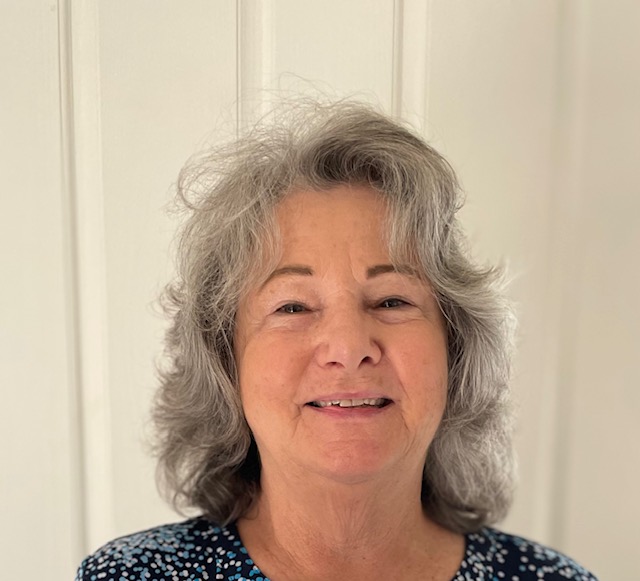
Antoinette Foxworthy is an award-winning author and speaker bringing awareness and conversation to the issue of domestic violence both in the U.S. and Canada. She knows, first hand, why those being abused don’t “just leave”. She knows the fear, the embarrassment, and the upheaval of starting a new life.
Her debut novel, No More, started as a three-page homework assignment.
Antoinette is also the author of Caterpillar, Rabbit and Fox, a heartwarming and educational story about a wise caterpillar, a friendly rabbit and a thankful fox who meet in a garden.
