Antoinette Foxworthy Reads “No More”: Exploring the Realities of Domestic Violence (Part 2/3) I Ep. 51

How do professional women navigate the hidden dangers of abusive relationships? In this episode of the 1 in 3 Podcast, Ingrid is joined by Antoinette Foxworthy as she shares poignant excerpts from her book No More. The narrative follows Dr. Anita Stone, a professional woman trapped in an abusive relationship, set against the backdrop of the O.J. Simpson verdict — highlighting the complex realities and societal pressures faced by survivors. Through Antoinette’s readings, we explore: The ...

 Apple Podcasts

 Spotify

 YouTube

 Amazon Music

 iHeartRadio

 Deezer

 PlayerFM

 Podcast Addict

 Podchaser

 PocketCasts

 Castro

 Castbox

 Goodpods
How do professional women navigate the hidden dangers of abusive relationships?
In this episode of the 1 in 3 Podcast, Ingrid is joined by Antoinette Foxworthy as she shares poignant excerpts from her book No More. The narrative follows Dr. Anita Stone, a professional woman trapped in an abusive relationship, set against the backdrop of the O.J. Simpson verdict — highlighting the complex realities and societal pressures faced by survivors.
Through Antoinette’s readings, we explore:
- The emotional and physical barriers victims face when leaving abuse
- Psychological tactics used by abusers to maintain control
- Misconceptions about why leaving is difficult
- The transformative power of storytelling for healing and advocacy
- The importance of support networks, including family, friends, and advocates
This episode also features a reflective Zen story about letting go of past burdens, emphasizing resilience and the journey toward empowerment. Listeners will gain insight into the real-life struggles of survivors, while understanding the importance of compassion, patience, and advocacy in supporting those affected by domestic violence.
🎧 Key Takeaways:
- Realistic depictions of abuse and survival
- How literature can empower survivors to share their stories
- Practical advice and resources for victims
- Understanding the psychological, social, and legal barriers in leaving abuse
- The critical role of supportive allies
Sources:
https://www.bwss.org/eighteen-months-after-leaving-domestic-violence-is-still-the-most-dangerous-time/
https://domesticviolencehomicidehelp.com/statistics/
https://stacks.cdc.gov/view/cdc/6543/cdc_6543_DS1.pdf?
Amazon link to purchase "No More": https://a.co/d/cfsgEOy
Antoinette’s bio: https://www.1in3podcast.com/guests/antoinette-foxworthy/
1 in 3 is intended for mature audiences. Episodes contain explicit content and may be triggering to some.
If you are in the United States and need help right now, call the national domestic violence hotline at 800-799-7233 or text the word “start” to 88788.
Contact 1 in 3:
- Send your emails to 1in3podcast@gmail.com
- Follow on Facebook, Instagram, and TikTok @1in3podcast
- Check out the website https://www.1in3podcast.com/
Thank you for listening!
Cover art by Laura Swift Dahlke
Music by Tim Crowe
0:23 Hi Warriors, welcome to One in Three. I'm your host, ingrid. Last week we had the opportunity to listen as Antoinette Foxworthy discussed what led to writing her book no More. Today, she graciously reads excerpts of no More and offers insight into the significance of some of the details she included in her writing. Here is Antoinette. Well, antoinette, welcome back.
1:05 I'm very excited for this next episode. Thank you. Thank you. We talked in the first podcast about how and why I wrote no More, and I'd like to read the first few pages of the book. Remember, this book got started with the homework assignment, so I had to write a homework assignment and that's how the first six pages got written. So I'd like to read specifically from the book so the audience can see what the book's about. That would be great. And quick question did you change those from the original pages that you wrote for your class, or are those the actual? They're pretty close. They're pretty close to what I wrote for homework. I got a good grade. Yes, well, obviously.
1:45 I got a good grade, yes. Well, obviously Okay, no more by Antoinette Foxworthy. Her knees buckled as she collapsed in the chair. Her lungs seemed to be vacuumed of all air as the verdict was read. We, the jury, find the defendant Orenthal, jane Simpson, not guilty in the crime of murder. How could this be? This is not right. No, no. Dr Anita Stone wholeheartedly believed OJ Simpson, bludgeoned Nicole Brown Simpson and Ronald Goldman to death. She maintained her composure even though bile rumbled in her gut. She was in the break room at her office along with seven of her employees, all transfixed on the television.
2:30 There was an audible gasp as the verdict was read. Her staff, all seated in straight back birch chairs around the rectangular lunch table, collectively stiffened and bent their heads down. Clearly Anita wasn't the only one shocked. She hadn't engaged in direct conversations with her employees about the trial, but she had overheard them discussing how they felt the country was divided along race lines in their opinion of OJ's guilt or innocence. Anita had one Black woman on her staff and she suspected that staff member thought OJ was innocent. The rest of her staff thought he was probably guilty.
3:13 They all knew OJ was an American hero, a football legend and a Black man at a time when Blacks were believed to be getting a raw deal by the police. Had the prosecution done their job, presenting enough evidence to convict OJ beyond a reasonable doubt? Clearly this jury didn't think so, but Anita was convinced that OJ was a murderer, even though the prosecution didn't prove it. To Anita the judicial system had failed, failed Nicole Brown, simpson, ronald Goldman, their families and all those suffering from domestic abuse. The light beige room became dark.
3:54 The walls distorted, wavy, as if they were collapsing. The air became still stale and foul. It was like a vice gripped Anita's chest, but she forced air into her constricted lungs once. Twice she closed her eyes, circled her head, trying to relieve the tension in her neck and shoulders. Then she took another breath and slowly opened her eyes. She knew all too well how to squash her emotions, bury them deep in the earth and continue on. It was an all too common practice. Now she turned toward the hallway, praying. Her secret was not revealed on her face or in her mannerisms. She walked out of the break room to see her next patient, knowing that underneath her designer long sleeve silk blouse and white lab coat, she hid bruises, bruises on her upper arms inflicted by her husband Daryl.
4:49 Slowly making her way down the hallway she stopped at one of her favorite pictures. It was taken by her business partner, dr Thomas Kirkland, on his recent trip to Maui. Sunlit clouds mirrored on the calm surface of the Pacific Ocean. Taking in the imaginary fresh tropical air of the ocean, she pulled it down into her lungs. She relaxed her shoulders, but her neck remained tight and stiff. How had she gotten herself into this mess? How had she not seen the signs? She had never met a person so full of contradictions before. Like Dr Jekyll and Mr Hyde, she had seen the results of physical violence in her orthopedic practice and had said and pinned fractures from abusive relationships.
5:35 She even studied battered wife syndrome in medical school as part of her mandatory classes. But she didn't fully grasp until recently how or why women grasp until recently, how or why women, particularly intelligent, professional women with careers, not just impoverished ones didn't just leave their abusers. Now she understood it all too well. She was one of them. She learned. It's not about money or lack of it. It's not about getting out of an abusive relationship. It's about getting out and not looking over your shoulder. Getting out without being too scared, walking to your car after work in the dark.
6:16 Getting out and not fearing for your safety or the safety of those you love. Getting out wasn't easy. Anita had married Daryl on the rebound months after her first marriage dissolved. He looked good on his resume, an MBA from UC Berkeley, a member of the Chamber of Commerce, a successful businessman, who happened to be ruggedly handsome too. His wavy mane of caramel colored hair was just long and unruly enough to look sexy. It projected both a naughty guy and eye cleanup well one. He stood six feet two inches, tall and proud. His mustache was neatly trimmed, his jaw chiseled and strong. A Tom Selleck twin.
6:58 He wooed her off her feet, promising unconditional love. On this day, october 3, 1995, after her last patient, anita hurried to her car, careful not to seem rushed. She pulled out of the parking lot and drove around the corner and opened the door, thinking what the OJ Simpson verdict of not guilty meant to battered women everywhere. She vomited the contents of her stomach and bile into the street, the contents of her stomach and bile into the street. When she was certain the heating had stopped, she shut the door, sipped stale water from the water bottle in her car, wiped her mouth with the tissue, sat up straight and headed home. Her stomach felt as if a roller derby was happening inside her, complete with the elbows and the ribs and the racing to catch up to an opponent, only to keep going around and around in circles.
7:50 Her saving grace tonight was that Daryl was out of town on business and she did not have to face him. She didn't have to face anyone except the mirror. She slipped into her pajamas at 7.30, made a cup of herbal tea and sat in front of the television, mesmerized by the coverage of the OJ Simpson trial. With bleary eyes she watched over and over his reaction to the not guilty verdict. There was a smirk on his face. She saw it. How dare he? She was feeling trapped and embarrassed and, after today's verdict, very, very alone and afraid. She couldn't believe she had gotten into this mess. She wanted to get out, get off of this roller coaster of ups and downs, but how?
8:34 The plan she made with the counselor didn't seem right. Instead she wanted to discuss their situation again with Daryl, hoping he would understand. She didn't just want to leave one day. She felt like a complete loser. Just want to leave one day? She felt like a complete loser. How could she get out with her dignity intact? Who could help her. She told everyone how perfect Daryl was for her. She'd lied for so long to everyone, including herself. That was the first six pages of my homework assignment. I can see why they made you keep writing. The book, though, is not just.
9:16 The book offers some suggestions or some help as well in the characters, and one of the things I realized with my own personal situation is how important it is to have people around you that love you and support you and believe you, even though sometimes you don't tell them. I didn't tell anyone for a long, long period of time, but I want to read one example in the book that I wrote about a very valuable lesson, and I think maybe others can relate to it. Anita Stone's best friend is Barbara, who happens to be the wife of her partner, dr Thomas Kirkland. As they sat on the sofa, staring through the sliding glass door into the blue, anita felt tiny tears trickle down her cheeks.
10:05 She turned to Barbara and quietly said I think I've always had trouble with letting go of things, letting what go? Oh, I still have rumblings deep in my gut about my dad, about how he just left and basically abandoned us. It weighs on me like an irksome hangnail that is always there. Barbara grinned. Letting go is an age-old problem. We've all had to deal with it, but some of us are better at it. She rubbed the back of her neck. My mom told me a Zen story that seemed to help me. I had dad issues too. Anita leaned over to the end table and took out a tissue, gently wiping her tears from her cheeks.
10:49 Tell it to me, barbara, maybe it will help me too. Sure, barbara uncrossed her legs and gently closed her eyes, allowing the total darkness to more keenly focus her memory. After a moment she fluttered her eyes open and said here's how I remember it, dear wise Barbara. Nita said as she turned her body toward her friend. I'm ready to listen and hopefully learn In an even soft tone Barbara started. The story is about two monks. One is old and one is much younger. They are traveling together on a long journey on foot. Due to the heavy rains, there are deep puddles they have to cross.
11:32 They reach a young woman dressed in her silken robes, looking very cross and impatient. They reach a young woman dressed in her silken robes, looking very cross and impatient, standing near a large puddle. She is reprimanding her attendants whose hands are full of packages. The younger monk notices the woman. He says nothing and walks by. But the older monk picks her up. He carries her across the water and puts her down. She doesn't say anything or acknowledge him in any way. Anita's tears had stopped flowing, barbara took a deep breath and continued. The two monks continue on their way in silence. After several hours of quiet, the younger monk says that woman back there was so selfish and rude but you picked her up and carried her.
12:19 She didn't even say thank you. The older monk slowed his pace. He turns and replies I set the woman down hours ago on the side of the road. Why are you still carrying her? I love that story. I read it and I wanted. I was like I need to remember this story. It's so incredibly powerful. It is a powerful story. So I wanted also to talk to you about what happened after the book was published. So when the book was published I thought I was going on a tour to promote the book. So I started small at book clubs where the people at the book club had read the book and we talked about my writing and the book.
13:02 But soon I realized what they really wanted to talk about was domestic violence. They wanted to hear more, they wanted to tell me their personal stories. It just developed, it morphed into something much more than I had ever imagined and what happened is women started coming up to me mostly women started coming up to me and telling me their own personal situation. And this is sometimes the very first time they admitted that they were being abused. And there's a very powerful saying that says you can't change what you don't acknowledge. And these women were acknowledging it for the first time, sometimes with me.
13:45 Now let me just tell you that just because they acknowledged it doesn't mean they're getting out, doesn't mean they know how to get out, because the statistics also say that a woman leaves her abuser seven times before she leaves for good. That was hard for me to understand, but what happens is this abuser just whittles and whittles away at their ego until they don't feel that they're strong enough and their ego's in the tank or the toilet. So they don't know what to do. They're not ready to make a plan yet. So that happened a lot of times. They say there are stages of leaving that I read about.
14:27 One is finally not caring about the abuser and then disconnecting a bit from the relationship. So that happens. And then the person being abused finally starts noticing the effects of the abuse and we're not talking about just because there's a broken arm or something. They start really understanding the effects and they start making preparations to leave. But then what happens is they go back to the relationship because oftentimes they're in love with this person, they think they're going to change. They think the abuser tells them they're in love with this person. They think they're going to change. They think the abuser tells them they're sorry. So they go back and forth and back and forth until finally they leave. So some of the questions I got a lot about leaving.
15:11 Why doesn't someone just leave? Well, remember they're 70 times more likely to be murdered in the first two weeks after leaving. And how about another statistic the presence of a gun in a domestic violence situation increases the risk of homicide by 500%. That's scary. Why don't they just leave? Of course it's hard. Right, I knew that one. I didn't know the first one, but I knew that 500% which, when I first learned that, blew me away. Yeah, it's really scary. It's a really difficult time. I talk about a lot about women, but men also get abused.
15:54 I just have more, more experience with the women that I talked with. Here's an example of something that happened. I was in Utah doing a reading and talking about domestic violence and one lady came up to me very quietly after class and I said, well, well, that often is the first step, but not only that. When you have a broken arm, it's a physical illness that other people can see and you put a cast on it and heals in six to eight weeks usually, and then you go on with a little physical therapy maybe, but the emotional and the mental abuse can last long, much, much longer.
16:46 So I talked to her at length. She didn't know what to do. I said, well, why don't you go to a counselor or to your church bishop? So she was Mormon and she said she already had. She went to the bishop and you know there's a strong cultural and religious shame in Mormonism about divorce. So she felt trapped. She felt trapped and didn't know what to do. I suggested another counselor do? I suggested another counselor. But there's also a lot of teachings about not going outside the church. So you know I didn't. I don't know whatever happened to her.
17:27 Now the official doctrine of the church says that abuse of any kind isn't permitted. So I don't want to. I don't want to bash any religion, but she felt she was trapped in the situation and I really didn't know how to help her. I just told her to surround herself with people who believed in her and to see what she could do. I just don't know what happened to her. But that's not the only one I didn't know what happened to. I also got a call, remember when I did these book readings. Then I got asked to talk to a woman's shelter, which I did, and then there was a woman at the woman's shelter who was in charge of getting speakers for the military and she wanted me to speak to the military.
18:16 We have a military base in town and she wanted me to speak to the military. We have a military base in town. So I said I would. I said I had to do some research on what domestic abuse is like in the military and it's a bit different. So in the military the consequences of domestic violence are handled by the CO, the commanding officer, and the commanding officer can decide to discharge a person, they can take away their use of firearm, which is huge, or they could just write them a reprimand. I mean, it's really the CO that determines what happens them a reprimand.
19:01 I mean it's really the CO that determines what happens. When I was doing the talks, the women I talked to were afraid to report their domestic abuser because they were afraid they would lose all their benefits, because if their husband or boyfriend was discharged or if he was, you know, in trouble, they would lose their benefits. But the Department of Justice abused felt more comfortable going to report that. So that was very interesting.
19:47 What other questions did I get? I got a question about no more. Do you think victims all have this aha moment or this catalyst that helps that? And I don't know. I think it's different for individuals. Everybody has their own way of dealing with domestic violence. For me, I was finally able to hear what somebody was saying and you know, as a mother, I wanted to protect my children and when that police officer said what example was I setting for my children? That was enough for me to say I need to get out. The other thing that happens is I really believe you need to have strong advocates for you you need, even though your abuser tries to alienate you.
20:33 I think it's really important that you surround yourself with people that are kind to you and comforting to you. Domestic abuse happens mostly between the ages of 18 and 35. So oftentimes the abused person's parents are still alive. But I found that most of the women I talked to were afraid to go to their parents. They were afraid because they thought they were a failure or what would their parents think, the same sort of thing that the abuser was telling them. I had a friend who just told me about her abuse and she said she went to an all-girls school and all-girls high school and then she went to college and she was in a sorority and then her first boyfriend was abusive and she said I was so naive I didn't realize.
21:27 I everybody's naive, everybody. Nobody knows this stuff is going to happen. They don't happen overnight. It happens gradually, whittle and whittle and whittle. And this particular person said she was strong enough to go to her mom and dad. She said she woke them up from bed one night and she said I'm in trouble, I need your help, and so her parents helped her out of the situation. So you never know where you're going to find that advocate that's going to help you get out you never know where you're going to find that advocate that's going to help you get out.
22:08 I think it's important that once you realize you're in this situation and you understand that you need to get out, it's important to start talking to people Because unfortunately, you do lose a lot of friends and some family members may desert you along the way because they see what's happening and they get so frustrated that you keep going back or you haven't left yet. But I think the more people you talk to, the more likely you're going to find somebody who will support you and that is so key to being able to get out for a variety of reasons having a safe place to go. You know you may be financially struggling and not unsure of where you can stay, and just the moral support of you can do this. You've got this. Right, right, a real positive feedback. Oh, for sure, for sure.
22:48 In one of the talks I actually have cards that I put together where the women could read out loud what you could say to someone if they told you that they were in this situation. The first thing you do is believe them. The first thing you have to do is believe them, because a lot of people think that they're not going to be believed and there's things that you can say that might help them. I support you, but the one caveat is you can't if you are trying to help someone, you can't put yourself in the middle of the situation, because then you're in danger. And if this abuser is willing to abuse somebody he apparently loves, can you imagine what he would do to somebody who he could care less about and could actually alienate you a lot more?
23:40 So very true. And I think another thing is for family members or friends or colleagues whoever knows somebody that may be a victim of domestic abuse to continuously give them support and understand that they might not leave and they may not listen to you. But if you abandon them, then they have no one and when they finally come to that realization, or they hit that catalyst like you were mentioning of, okay, I think I need to get out, and they start making those plans. They have no one to turn to and then they're just so much more likely to stay. But just, it's hard. It is hard and it's frustrating to watch this horrible thing happen to your loved one.
24:22 But just say when you're ready, I'm here, I will help you, I will be there. That's so powerful. That's so powerful Because it doesn't happen overnight and, as you know, they keep going back and back because they, you know, usually it's somebody you love. Just because somebody you love does something bad doesn't mean you don't love them anymore. It has to take. I can't do this anymore or this isn't right for me anymore. Absolutely. And when you're saying it's difficult sometimes for somebody to admit, I'll say personally, I had a colleague say you know what, there's this therapist I want you to talk to.
25:02 I think she could be very beneficial for you. And I said no, I'm not ready, because and that person thought I was crazy they're like why would you not talk to this therapist? And I said I'm not ready and I know that person is going to give me the tools I need mentally to leave and I'm not there. Right, right, right, because you're giving up, you're giving up a whole life, you're giving up something you planned Usually it's with a partner or a even a husband right you? You have to give all that up and say I'm going to make a new life for myself, and that's not easy for anybody.
25:43 No, and there are so many reasons people stay, and there's physical reasons, there's financial reasons, but I spoke with someone who she didn't have. She was OK, she could leave financially, she didn't have children, she wasn't married, but she said I had. It was almost like this chemical dependence on this man and she's like I've never done drugs, but I liken it to this an addiction of. And she said when I left I had physical withdrawals and which I was like. That is so because I, you know, I had my own variety of reasons where I it was difficult for me to leave, but I had not ever looked at it the way she presented it, and so I thought that was.
26:27 That was another like eyeopening reason. Yeah, I haven't heard that before, but I've heard a lot of other things, but I haven't heard that it's usually financial or afraid of being, you know, humiliated or embarrassed or what will people think of me? There are a multitude of reasons and there's not just one reason. There's never just one reason. There's a lot of reasons that people stay and then hopefully they have this catalyst and they move on. Absolutely. I do want to say when you were reading the parts of the book before, I do want to emphasize that that book, like you mentioned, it is not just all hardcore domestic abuse to where it's difficult to get through, and I think it flows well enough and there's a good enough storyline that you're not just being bombarded with all this heavy, heavy topic and you know, as somebody who's gone through an abusive relationship as well, it's important to understand that there could be some triggers there for people.
27:40 I didn't feel personally triggered by anything, but there were a few times where I did tear up and it was in situations where it was more of. I'm so glad she had that support. It was like a happy tear. I got that feedback a lot, that people wanted a break. They wanted a break, they wanted to know that there was a way out. So I tried to weave that into it too. So, yes, it's a scary situation, but she had support and there were times when people would support her, or even strangers supported her. The doctor she meets in the cafe that supported her.
28:22 So, yeah, it was very well done and I really appreciated reading it. I thought it was a great book, but we have one more episode we're going to get to, and is there anything you would like to say in closing with this one? You know, when I wrote the book I wasn't sure how it would be received or what would happen with it, but I got so much positive feedback. One woman said, you know, she read it and she had been in an abusive relationship. But she didn't. She was out of it, but she didn't know what to do. She wanted to help and after she read the book she found where she could volunteer online and so she felt like it was a trigger for her, even out of her abusive relationship, to see how she could help other other people in that situation.
29:13 And that's exactly why I wrote the book and I think that's great because it shows that sharing a story like this it opens up discussion and it opens up a safe place almost for other individuals to be able to talk about their own experiences and find other ways to help other victims, other survivors, and I really do appreciate you coming on and sharing parts of your book. Well, thank you for what you're doing for the community. People really appreciate getting the word out so people can have a conversation about it and hopefully figure out what to do in their lives to be safe.
29:54 What a great episode. I really appreciate how Antoinette's book takes the reader through the mental and physical steps of leaving an abusive relationship. I say this often, but there are parallels that most survivors recognize between their own story and someone else's. This book is no different. As usual, I came up with some parting thoughts while editing. Antoinette brought up statistics, some that were familiar and some of which were new to me. This sparked my curiosity, so naturally, I wanted to learn more. Statistics may seem cumbersome, but that is the concrete evidence legislators look for when making changes. Here's what I found.
30:34 Antoinette mentioned the 70% increase in the risk of victim homicide during the first two weeks a survivor leaves their abuser. Beyond those two weeks, there is a 75% increased risk of violence for up to two years. Intimate partner violence homicides don't always affect just the victim, however. 20% of IPV homicides include people who intervene, including family, friends, neighbors and law enforcement, as well as bystanders. Now, we all understand domestic violence affects women and men, but given 85% of victims are women and 15% are men, most information concerns women.
31:17 That just means the following numbers are much higher. Between 2001 and 2012, 6,488 American troops were killed in Afghanistan. In that same time frame, 11,766 American women were killed by current or ex-male partners. In the United States, there are 4,774,000 women who experience physical violence by an intimate partner each year. Now, those who are not directly involved in domestic violence situations may wonder why any of this information matters to them, so I decided to look up the financial impact domestic violence has on society.
32:02 Again, this information is related to women only, so imagine what the actual findings could be. There is an annual medical and mental health care cost of $4.1 billion. The loss of productivity costs due to days off or leave of absence is estimated to be $858.6 million. In the case of homicide victims, the loss of expected value of life earnings is $892.7 million. Overall, the annual financial impact domestic violence has in the United States is approximately $5.8 billion.
32:46 I don't know about you, but those numbers alone should be enough motivation for everyone to take action against domestic violence. I would like to thank Antoinette for taking the time to join me again and thank you for listening. Sources for today, along with the link to her bio, are found in the show notes. I have also included the Amazon link to purchase Antoinette's book no More. I will be back next week with Antoinette as she discusses what victims, survivors and advocates can do with all of this information. Until then, stay strong and, wherever you are in your journey, always remember you are not alone.
33:32 Find more information, register as a guest or leave a review by going to the website 1in3podcastcom. That's the number 1-I-N-3podcastcom. Follow 1in3 on Instagram, facebook and Twitter at 1in3podcast. To help me out, please remember to rate, review and subscribe. 1in3 is a Point5Pinoy production music written and performed by Tim Crow.
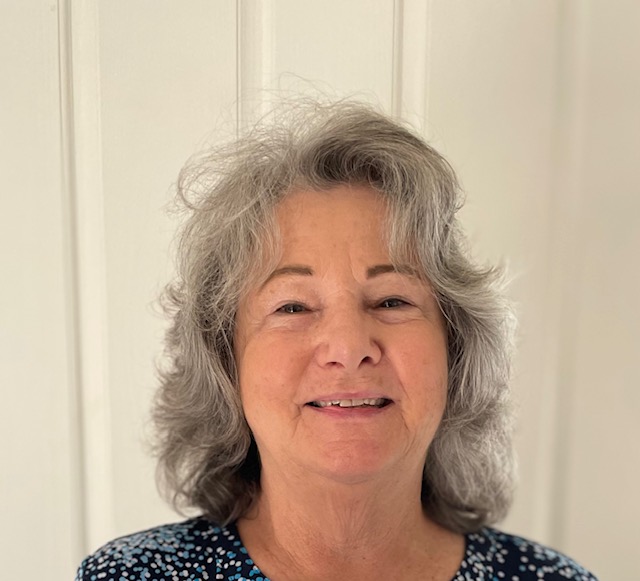
Antoinette Foxworthy is an award-winning author and speaker bringing awareness and conversation to the issue of domestic violence both in the U.S. and Canada. She knows, first hand, why those being abused don’t “just leave”. She knows the fear, the embarrassment, and the upheaval of starting a new life.
Her debut novel, No More, started as a three-page homework assignment.
Antoinette is also the author of Caterpillar, Rabbit and Fox, a heartwarming and educational story about a wise caterpillar, a friendly rabbit and a thankful fox who meet in a garden.
