Healing Trauma Through Poetry Therapy with Margaret Bryden I Ep. 126
When trauma leaves you without words, poetry can become a way back to yourself. This week on 1 in 3, host Ingrid sits down with licensed clinical mental health counselor Margaret Bryden to explore how poetry therapy helps survivors process traumatic experiences, regulate emotions, and reconnect with their own voice. Margaret believes you don't have to be a "good writer" to benefit from poetry. In fact, her philosophy of bad poetry encourages people to silence their inner critic and simply beg...

 Apple Podcasts
 Spotify
 YouTube
 Amazon Music
 iHeartRadio
 Deezer
 PlayerFM
 Podcast Addict
 Podchaser
 PocketCasts
 Castro
 Castbox
 Goodpods
 When trauma leaves you without words, poetry can become a way back to yourself.
This week on 1 in 3, host Ingrid sits down with licensed clinical mental health counselor Margaret Bryden to explore how poetry therapy helps survivors process traumatic experiences, regulate emotions, and reconnect with their own voice.
Margaret believes you don't have to be a "good writer" to benefit from poetry. In fact, her philosophy of bad poetry encourages people to silence their inner critic and simply begin.
Together, we discuss:
• How poetry therapy supports trauma recovery
• Why metaphor often feels safer than telling the whole story
• Expressive writing as a mental health tool
• Using poetry to process grief, abuse, and difficult emotions
• The role of response poems in therapy
• Why handwriting can deepen emotional healing
• How therapists incorporate poetry into individual and group counseling
• Finding hope through creativity and connection
Margaret also shares excerpts from her upcoming book, How I Understand It: A Bad Poet's Guide to Mental Health and Resilience, releasing September 1, 2026.
Whether you're a survivor, therapist, advocate, or someone searching for new ways to heal, this conversation offers practical insight into one of the gentlest forms of trauma processing.
If this episode resonates with you, please subscribe, leave a review, and share it with someone who could benefit from this conversation. Every share helps more survivors discover they are not alone.
Margaret’s Links:
https://www.1in3podcast.com/guests/margaret-bryden/
https://www.sageinsighttherapy.com/
https://www.sageinsighttherapy.com/
https://www.facebook.com/profile.php?id=61586527275910
https://www.linkedin.com/in/margaretbryden/
1 in 3 is intended for mature audiences. Episodes contain explicit content and may be triggering to some.
If you are in the United States and need help right now, call the national domestic violence hotline at 800-799-7233 or text the word “start” to 88788.
Contact 1 in 3:
- Send your emails to 1in3podcast@gmail.com
- Follow on Facebook, Instagram, and TikTok @1in3podcast
- Check out the website https://www.1in3podcast.com/
Thank you for listening!
Cover art by Laura Swift Dahlke
Music by Tim Crowe
00:00 - Why Poetry Belongs In Healing
01:33 - Margaret’s Background And Book Origin
05:43 - Making Poetry Practical And Accessible
10:18 - Using Poems In Individual Therapy
13:03 - Metaphor, Trauma, And Gentle Distance
22:18 - Teen Emotions And Everyday Poetry
24:58 - The Bad Poetry Philosophy
29:08 - Faster Insight Than Journaling
37:03 - Book Structure And Therapist Tools
43:53 - Hope, Handwriting, And Closing Poem
Why Poetry Belongs In Healing
SPEAKER_01
Hi, Warriors. Welcome to One and Three. I'm your host, Ingrid. If you've listened to this podcast before, you know I often talk about the importance of therapy. When you have the right therapist and the right approach, it can truly be life-changing. I've also shared how journaling and telling your story can be powerful tools to heal. Today we're exploring another creative approach toward healing. I'm joined by Margaret, licensed clinical mental health counselor and self-proclaimed bad poet, to talk about how poetry can help us process our trauma, express emotions that are difficult to put into words, and support the healing journey. Let's get started. Hi, Margaret. Thank you so much for joining me on one and three and welcome.
SPEAKER_00
Thank you. Thank you for having me here. I'm honored.
SPEAKER_01
I'm honored to have you on. And before we get into the gist of the conversation, could you give just a little bit of a background about yourself?
SPEAKER_00
Sure. I mean, I'm a woman. I grew up in California and Venezuela. So I have a multicultural background. But right now I
Margaret’s Background And Book Origin
SPEAKER_00
live in Utah in Salt Lake City. And I am a therapist, but I wasn't always a therapist. I had a career in human resources before I became a therapist. And I've been a therapist for about the last four years and then grad school before that. So I consider myself a pretty well-rounded person in that sense. And I love my work that I do as a therapist. Right now I work at a psychiatric hospital and also I have a private practice where I see individual clients. So I see the range of client experiences from people who have really acute mental health disorders like bipolar and uh things along that spectrum, and really high-functioning clients who are working professionals, who have very different kinds of issues going on in their life for which they would uh appreciate support. And I have written a book, partially because of my work as a therapist and the things that I see that are common to all of my clients and the issues, the human issues that come up again and again. So I'm really excited to talk to you about that.
SPEAKER_01
I am too. And before anyone thinks, oh Lord, here we go, another therapist, another person telling us exactly what to do. This is this is a really interesting way to get emotions out. So let's talk about the book a little bit because I think all of our conversation flows into the book. So tell us a little bit about your book.
SPEAKER_00
Where to start? I feel like this book is there's so much packed into it, it's almost hard to explain. It's a more of an experience. Um, I'll say this. I think part of what helped create the book, part of the motivation to write the book was definitely my experiences as a therapist and seeing kind of the range of human experiences and the different themes that kept coming up again and again and again in all my therapy sessions. And a big part of the motivation behind originally writing the book was actually to create something for my daughter that would allow her to have my voice, allow her to have my knowledge that I've acquired over the years and through all the grad schools, and that I wanted her to have a piece of me in case something were to happen or in the future she didn't have me by her side during different life phases. So that was the origin of the book, was writing something for my daughter and trying to fill in as much information as possible that I thought might be useful to her. And when I started writing, I didn't know exactly what the book would look like. And to my surprise, what came out was poetry. And I just, in retrospect, it it couldn't have been any other way, but it really surprised me when it happened because I didn't necessarily set out to write a book of poetry. But when you think about what poetry is, at its core, poetry is condensed meaning with heightened emotion. And I wanted to write something that would be engaging, that would be emotionally relevant, that would really strike a chord to the our humanity and to our shared experiences, and use that writing as a vehicle to convey a lot of helpful information or what I think is helpful information, and do it in a way that's a bit more engaging than a boring textbook and you know, 50 pages to explain one concept. I didn't want to do anything like that. I wanted to make it a lot more experiential and relevant and a useful tool that somebody could refer back to again and again over time in different life phases. So that was kind of the origin of the book.
SPEAKER_01
Yeah. And so were you an author or a poet before you did that?
SPEAKER_00
I would say my journey to poetry has been one full of joyful surprises. I don't think I've ever really considered myself a poet. And now that I've written a book of poetry,
Making Poetry Practical And Accessible
SPEAKER_00
I'm I'm happily calling myself a bad poet. Um I think when I was much younger and I was, you know, in undergrad and all that, and I would get exposed to any poetry, I was actually quite intimidated by it. And I didn't quite grasp it, and it made me feel a little stupid. Like, what am I not getting here? Why is this relevant? I didn't understand why poetry was practical or why it was useful. And I sort of ignored it and ran away from it for a long time. And I just I consider myself a very practical person. My first uh graduate degree was an MBA. So I'm very kind of um business-minded and solutions-oriented, and I just didn't see a practical application for poetry in my life. It seemed like a very luxurious endeavor for people who have like all this extra time to be able to, you know, ponder about what love is and all that. And I just kind of didn't get it. So fast forward, you know, 20 odd years later, now I'm becoming a therapist, and I can see how creative writing is a very practical, useful tool for a lot of different reasons for helping us express what's important to us, for gaining insight about what our emotions are really telling us, for using creative language to help organize our experiences into coherent narratives as a way to connect to others, as a way to receive, you know, validation and feel less lonely in our experiences. And I was like, oh, I get what poetry is about now. And I think there's a spectrum of poetry. You know, there's that poetry that's very elevated with inscrutable language and gigantic words. And I don't think I gravitate so much towards that kind of poetry. I gravitate towards poetry that uh uses very accessible language, and that there's um a message that's kind of somewhat easy to understand, that maybe wouldn't have been conveyed correctly in any other way. So that's kind of poetry that I gravitate towards now. And when I started writing, that's the kind of poetry that came out of me. Poetry that's perhaps really kind of raw, really honest, and not necessarily inscrutable, um, but very accessible.
SPEAKER_01
Yeah, I I'm with you. I'm a very linear thinking person and logical person. And so poetry has always been something that has been a little bit foreign to me too. I had a really difficult time in school, perhaps, because I'm not my creative side wasn't really awakened. And I think that my misconception, or actually, I guess it's not a misconception, there is some poetry that's written on this specific intellectual level, and you need to be very insightful, and there's one message. And if you don't understand what the message that author was trying to get by that very strangely to me, worded poem, I just I don't know, I got bored with it. Yeah, and I just didn't want to have to decipher, like, well, when they meant wind, what exactly did they mean by poetry is like a riddle?
SPEAKER_00
Yes, and you have to solve the riddle, and I was not into it.
SPEAKER_01
See, I like riddles, but I like riddles that you know it's a riddle and you have to try to figure it out. Poetry, like to me, it's not enjoyable if I have to figure out what the author is trying to say. I like poetry that is open to everyone's interpretation, and I I feel like your poem, your poetry is similar to what I enjoy because you may have been feeling a certain way when you wrote a poem, but the way it's written is going to mean something else to me emotionally because of what I've gone through. And so I think that's what's really cool about your poetry. And how does so in you incorporate poetry into your therapy? I do. Okay, how do you do that?
SPEAKER_00
In a variety of different ways. Uh, I do individual therapy, but I also do a lot of group therapy. In individual therapy, sometimes you have a client who has gone through an experience and they don't have the language to start talking about what it meant to them,
Using Poems In Individual Therapy
SPEAKER_00
and they they can't quite organize their experience linearly because it was traumatic. And I think poetry can help in a variety of ways in those kinds of circumstances. For example, if you have a poem that's about something similar that they that that client has gone through, you can read the poem and see if that starts engaging them and being able to talk about their experience, if that resonates with them and helps them feel less alone and their experience is a bit more understood and validated. So, and then they can write a response poem to that and and start being able to organize their thoughts around it that way. So being exposed to poems about something that's similar, or writing their own poems about an experience that happened to them, and then being able to share that and receive validation for that. That can be really empowering. To take something that was difficult or traumatic and turn it into art that other people can then appreciate is a very life-affirming experience. So doing something like that, it could also just be a creative expression, you know. Sometimes in order to fully process through and metabolize an experience or an emotion, it is important to just make something with it. And you can make art like with painting, or you can make art with language too, and put it in poetic form and have something that then you're you're proud of that you made something with, you've transformed your experience into something different, and now other people can appreciate it too. So all of those are things that are very affirming, very validating, very um helpful in terms of having a client organize their experiences. In group therapy, it's really powerful too. And one of the things that I like doing with poetry in group therapy is whenever I do a psyched, so I introduce new concepts, provide education to people about a theme. So, for example, if I do an psyched about boundaries, and I'm giving them new information about boundaries and what a boundary is and what a boundary looks like and when a boundary applies and how to communicate a boundary. All this is very good information, but how do they then take it? How do they organize it and internalize it and apply it to their own experiences? I find that giving them a creative writing exercise like poetry, after we've gone through some information, can help them truly make that information their own and also start thinking practically about how it applies to their situation and what boundaries mean to them and where they want to prioritize that. So it can be helpful for what I call integration in that way, integrating new information, connecting experiences with information.
Metaphor, Trauma, And Gentle Distance
SPEAKER_00
So, and then again, creating something that you can then share in a group is a very bonding, very life-affirming, validating kind of experience for people that helps us feel more connected and less alone. So poetry helps in a in a number of ways.
SPEAKER_01
Yeah, I uh so first of all, I really like the idea of you reading a poem and then having someone respond. I I immediately heard that part because to me, that's not as difficult of a task of okay, Ingrid, I want you to go home and I want you to write about what you're feeling, and I want you to put it in a into a poem. I think I would be overwhelmed, yes, and think wait, no, I I I can't even figure out what I'm thinking. But having something to respond to gives me kind of a starting point.
SPEAKER_00
I think I'm so intimidating, and you don't have to start from scratch. And I think it also helps with this knowledge that, oh, they had an experience similar to mine, they wrote about it, and I think it's fine. I can write about it too. You know, it's empowering that way to know that other people are doing it too, and this is their perspective, and your perspective is valid too.
SPEAKER_01
Yes. So, poetry for those who have gone through abuse or assault or trafficking is something that actually may help because it's those are ugly topics, those are horrific things, and and people who have survived those experiences have gone through a lot of trauma. And to write down in in plain words, this is what happened step by step to me, it's very glaring and it's intimidating and it's triggering, but to use different words to still get the feeling across is something that's so much more attainable, I think, for survivors.
SPEAKER_00
Yes, yes. With um metaphors, I I love metaphors. I think they're incredible, and they're something that's used extensively in poetry. You know, you're talking about the wind, but you're not talking about the wind, you're talking about this other force in your life, you know. So you you can use metaphor to talk about sensitive topics indirectly, but you're also taking information that you know about a known quantity, like a weather and pattern, and how that weather pattern works, and the information that you know about it, and you can overlay that information onto a difficult topic that you're having a hard time understanding, and suddenly you can understand it a lot more easily. So you're you're taking information from that metaphor and how that metaphor works and using it to help organize an experience that you're finding difficult to process. And that helps us form more of a cohesive narrative about things and helps us process through things. So metaphors are incredible, and talking about things indirectly is great, but also poetry allows for containment of difficult subjects in a nonlinear fashion, and that's okay. It's okay in poetry. If you're if you're doing talk therapy, or even if you're writing and journaling, I think most people know the expectation is you should tell something in a linear fashion. And that can be very intimidating for people who have experienced trauma. Um, trauma entails a lot of fragmentation and fragmentation of the self and fragmentation in terms of your narrative and your internal narrative. And it can be impossible for somebody who's been through a traumatic experience to say, well, first this happened and then that happened, and this was a consequence, and now I feel this. It's not possible. But with poetry, you can just start where you start and end where you end, and the middle is what the middle is, and it's all good. It can contain it. And it's a way to start creating a little bit of distance between you and what happened and be able to see it a little bit more objectively. It can create some space between you and what happened, so you can actually start seeing what's there and start organizing it in a way that then makes sense to you.
SPEAKER_01
Yeah, I I found that for me personally, when I was recalling what I had been through initially, it was almost very tunnel-visioned. It was the the immediacy of what was happening, and then the outside was sort of fuzzy or blurry. And the more I talked about it, the more that has opened up and I'm able to see more. But I feel like poetry gives you that opportunity without actively saying, Okay, I need to see what else was going on in that environment. It awakens that creative side, the other side of your brain, to where you might start recalling different things.
SPEAKER_00
And it's gentle.
SPEAKER_01
Yes, yes.
SPEAKER_00
I like poetry because it's gentle. You don't have to expose anything you don't want to talk about. You can talk about things indirectly, which creates a gentleness. It it can contain again the fragmentation. So it's it's a gentle way to start exploring things. And I also think with poetry, there are things that people would be willing to write down that is too scary to say out loud. The thought of talking about it is overwhelming. But if I say, okay, just write a poem about it, suddenly it's it's okay. And then they would write something that maybe they would have never said out loud. But once it's written down, then people feel a little bit more emboldened to actually say it out loud if they want to. So again, it's very gentle, very um go at the person's own pace. And I think part of what makes poetry so engaging and empowering is that it helps people take authorship and control of their own narrative at their own pace with what they feel comfortable doing. And I mean, isn't that the name of the game in therapy?
SPEAKER_01
Right. Well, and and people who have survived trauma, they have that whole loss of control through whatever it was that they were going through. So to be able to gain that back is huge.
SPEAKER_00
Yes.
SPEAKER_01
Um, so like what you were saying, it's when you are giving it to somebody else or reading it out loud to somebody else, and it's not as ugly as what you've gone through, it does feel a little bit more empowering because you're able to release some of that shame. Even if you're not saying this, he or she held me down and did this. You can use whatever metaphors, and it's still, you know what it means. So you're still releasing some of that. And the the purpose of therapy, the purpose of healing isn't necessarily to recall in whatever order exactly what happened. It's to get to the point of your emotional response to that and to heal yourself. It's not the name of let's tell a story. It's I need to, I need to heal myself and look inside.
SPEAKER_00
Yes. And poetry, I think, definitely is a gentle way to open that door and to gain more awareness and insight into how things have truly affected you.
SPEAKER_01
I also like, what was I writing? Okay, so I took so many notes. Uh so victims, when they're in these relationships, we already talked about control. The control is taken away from them. So they're not necessarily allowed to feel their emotions or recognize their emotions, or whatever emotions they're feeling are minimized, or just said, no, that's actually not what you're feeling. That's not what happened. And I do like the idea of poetry being able to allow, even if you're actively still in this situation, you can write poetry and it is metaphorical. So it doesn't the whoever it is that you're trying to hide from, escape from, survive, they can read it and it doesn't necessarily say, oh, you know, Joe did this to me, or might not necessarily know what it's about. Exactly. Exactly. So it's an it's a way to survive. I'm gonna use the word again, survive what you're going through because you're you're journaling it in a way that nobody can necessarily understand exactly what you're talking about. I liked when you and I talked before about poetry, because it's not just trauma. There's so many, there are th so many things that people will go through in lives. And one thing that stuck out to me is I have a 13-year-old son, and anyone who has a teenager knows that the emotions or or the in in my son's case, kind of the lack of. And I suppose Oh, they're there. They're there, yeah. It's just he doesn't know what they are. Yeah. And for the longest time, I've been trying to, whenever we would have interactions, I would give him consequences, and it should invoke some sort of an emotional response. Like he's going to be angry, like he got sent to his room, or he got whatever taken away from him. There should be disappointment, something. And I would ask to speak with him later. Like, were you mad at me? Were you, how did you feel about that? Did you feel it was a fair consequence, whatever? And he would just always say,
Teen Emotions And Everyday Poetry
SPEAKER_01
I don't know. And everything was, I don't know. I don't know. Are you happy? I don't know. Are Sad, I don't know. And it would I at first I was frustrated. I thought he was just being difficult and just not letting me know. But then I realized, I'm like, I don't think he actually really does understand what he is feeling because at that age, it's so much to deal with. Um, and with hormones and everything happening in life. And so I don't know that he was really understanding. And one day he did, he grabbed my hand and he told me that he was feeling a certain way. And I looked at him and I thought, oh my gosh, here we are. He finally is recognizing this emotion. And he's he's a very creative kid. He likes to play instruments, he writes, and so we talked about emotions, and he was saying, I really just don't know most of the time what I'm feeling. I can't put a name to it. So we talked about maybe go write something down. And then if you want, turn it into a story or a poem or go play on the piano just to try to figure things out. And he looks at me and he got so excited, he's like, I have to go. And he immediately jotted down a bunch of things, and then he turned it into a poem. I think he threw it away by now, but that's okay. That's okay. It was a poem about like a tree or a plant. And if you prune it too quickly, then it it stunts its growth. But if you don't prune it, then it doesn't grow into the the way it's supposed to, into its best purpose. And it was so amazing that he came up with this. And so now that's that's his thing.
SPEAKER_00
Well, poetry is such an underutilized tool. When people think about, oh, I'm going through something right now, or maybe I should talk to someone, or hey, today was just a hard day, the first thing that comes to their mind is not poetry, but I want to advocate that maybe it should be poetry. Why not? Yeah.
SPEAKER_01
So, okay, so when people think poetry and they think certain things, there's all different kinds of poetry. Should it rhyme? Should it have a certain cadence, things like that. That doesn't really matter.
SPEAKER_00
Well, again, I'm a bad poet, so I don't know that I'm overly concerned with how many verses or if it's a sonnet or if it rhymes. Um the let me explain maybe a little bit about the philosophy of bad poetry. Okay, good.
SPEAKER_01
That was going to be my next question.
SPEAKER_00
It's perfect.
The Bad Poetry Philosophy
SPEAKER_00
So I think that people have this expectation or understanding of poetry that it's very above, it's very erudite, it's very learned, and it's very unattainable for the average person to write, maybe read, maybe, but definitely not write. It it seems very far away and out of reach for a lot of people. And that's how I certainly felt about poetry for much of my life. So I came up with this notion that, okay, I'm just gonna do bad poetry and that's gonna be okay. And suddenly the idea of doing something and doing it poorly, it becomes, it lowers the barrier to it. And it sort of addresses any of the inner critic or any of the shame that we might have telling us that we can't do it. If the idea is to do it and to do it poorly, and even if I do it poorly, that's okay because that's kind of the point. Suddenly I can write poetry. So the idea of bad poetry is to silence that inner critic, silence the judgment about it before we've even written anything. It's not okay for that judgment to be dictating what we can or can't do. So hopefully that helps lower the barrier to entry for people to be able to write their own bad poetry. I think also the idea behind it is not to impress other people. So if you're gonna sit down and write a poem and the idea is that you're gonna impress people and win a literary award, okay, that's really intimidating. But if the idea is to write something that's just true to you, that's true to your experience and your perspective, that nobody else could write but you about what's important to you and how you feel about events that happened in your life, suddenly that's a lot more empowering. So the idea behind bad poetry is that it silences the inner critic and it should be empowering and inclusive and appreciative of different perspectives. That's part of the philosophy of bad poetry. And I think it's what made poetry accessible to me, and it's part of what I use in therapy, uh, this idea of bad poetry, because a lot of times when I introduce the idea of poetry to people, they go, I can't write a poem, please. Like, I'm not a writer, I don't do this, I've never even written anything. Why would I write a poem? And I go, just try it. Just try it. Uh it doesn't have to be good, it just needs to be real to you. And these same people who say that they couldn't write anything and that this was a ridiculous exercise, end up writing the best poetry I have ever read. It's really impressive. And when they've seen what they've created, they go, Oh, okay, I get it now.
SPEAKER_01
That's so cool. So let's talk, let's talk about that a little bit. How much what have you seen in your clients as a response after writing poetry?
SPEAKER_00
Well, a response that I actually tend to get quite frequently is, wow, I didn't know I felt that way. After they see it in writing and they realize how angry they are about something, or how upset and sad they are about something, or actually how they've moved on from something. Um, poetry can kind of really help highlight what those emotional realities are for you right now. So that's a response that I get fairly frequently that I really enjoy. Another one that I uh tend to get fairly frequently is, oh, this is quite good. I should write more. I love that. And I love getting that kind of response too. Um a lot of times people will write something and then they'll say, Well, this isn't a poem. Like I wrote it like a paragraph. And I say, Okay, can you read it? Can you read it to me or can you read it to us? And then they read it and everybody goes, Oh my god, I'm so moved by your poem. So it's just surprising. And I think that's part
Faster Insight Than Journaling
SPEAKER_00
of the power of bad poetry, is you don't know what's gonna happen, but if you try, something will happen.
SPEAKER_01
Yeah, that's so cool. Do you think that people are able to get to the root of their emotions any at a different speed by doing something like this than versus traditional talk therapy?
SPEAKER_00
I think it's different. And it depends on where the individual client is and you know what what they resonate with. I do think certain people maybe respond better to talk therapy than they do to bibliotherapy or to writing, but it's a tool. And I think for somebody who has problems expressing themselves verbally, this can definitely be a way to start hitting on things a lot faster. I think also hold on, let me gather my thoughts about this for a second. So if you have a client that's very reticent to speak because they think that their experiences are so uh unique to them and shameful, it can be really helpful for them to see that other people have gone through different things or similar things and that have those same kinds of feelings about it because it can really help open the door for them to talk about their experiences and feel less alone. Um I just think people who also maybe respond better to creative kind of methods might also respond better to this than traditional talk therapy. Traditional talk therapy can be really intimidating to a lot of people. So the idea of going into a room and sitting down with a stranger and telling them all your problems and your deepest, darkest secrets, that's like a lot. Yeah. Um so poetry can be maybe a kind of gentle way to enter through that door sideways. You don't have to come in disclosing everything all at once if that's too much. You can come in and maybe share something that you've written. Um so some of the clients that I've had over the years might have a difficult time talking about their experiences. But if I tell them, hey, can you bring a song and share it with me next session about what it is that you're feeling that week or what it is that you're feeling that day, they can always find a song. And what are songs? Songs are poems set to rhythm and music. That's right. So there are definitely people who find that using poetry and using creative types of expression does help them open up more in therapy than what traditional talk therapy would do. And I do think it can help people get to the heart of matter a lot more quickly. So, for example, if you contrast therapy with uh poetry with journaling, a lot of times people are familiar with journaling. You know, your therapist, you go to a therapist, and your therapist is like, oh, you should journal about it. So people are very familiar with journaling, and it's a tool that therapists use very often. And what I find with journaling is that it is very powerful and it does have its time and its place. I'm not trying to put journaling down. Okay, journaling is great. Everybody should probably be doing journaling. But journaling is very kind of verbose and getting lost in the details about things, and very linear and very kind of solution oriented. So when somebody's journaling about something, they're trying to figure it out, they're trying to solve this problem, they're trying to figure out what happened first, and he said and she said, and what were they wearing, and what were the color of everything, and that you kind of get lost in the details of journaling sometimes, whereas I give the same prompt until somebody write a poem about it. Suddenly all those extraneous details aren't the focus and they don't appear in their writing, they focus on the heart of the matter. Journaling you can do without being very emotive, but poetry, people instinctively know if you want them to write a poem, they should be writing about their feelings about it. They just instinctively know to go in that direction. And so I think people end up writing less and they end up writing more about their emotional matters more quickly, and that can help create a lot more insight more quickly, depending on what that client is trying to do in therapy. So I hope that answers the question. It does.
SPEAKER_01
It does. And it actually, so for myself, God bless my therapist, because she has her hands full with me. When I first went in, I was like, okay, listen, this something bad happened to me. I need to get over it. So let's go. And she's like, hold on. We need to talk a little bit first. I'm like, there's no time to talk, let's go. Because for me, it was I was looking at the end goal. Like, I need to just be healed. Like that's the the finish line. And it was, it, I didn't, I wasn't realizing that healing is actually that that whole journey. There is no destination, there is no finish line. It's the whole, the whole concept of it. And I I don't know if she mentioned journaling or if I did, but I was like, no, that's not going to happen because I need to heal.
SPEAKER_00
Don't you understand this? I don't have time for this.
SPEAKER_01
I don't know what I would have told her, told my therapist, if she would have said, let's have, let's have you write a poem. I probably would have said this, no, I'm not a poet. I'm not going to do it. Have you had people who you've suggested poetry and they're like, no, but then eventually they come around to it?
SPEAKER_00
I think 80% of the people that I propose it to, their immediate reaction is, What? No, I came here for, but then I explain what it's about and how it might actually help them. And I don't think I've had anybody flat out refuse that everybody's kind of embraced it because I think once I explain what it is about and how it can be helpful, they kind of see the purpose behind it and they're willing to give it a try. Going to therapy is about trying new things, things that you haven't done before, taking a different perspective, taking a different approach, doing a different kind of exercise to see if that does help you along your healing journey. And I've been fortunate enough to work with clients that are pretty open-minded, I think. So they've all been willing to give it a try to great success, I would think. And I just want to say one more thing about you what you were saying. I do get a lot of clients that come in and they're like, I need to be healed and I need to be healed. Now I want to be over this. And they want to rush, rush to that finish line of feeling better. Who doesn't want to feel better, right? And I think the process of therapy is understanding how to slow down. Slow down. And I think a lot of clients hate that at first. But then they start to see how that's relevant to the healing process. And both journaling and writing poetry can it's a way to help you slow down. With poetry, especially, I think it helps you slow down enough to write what your thoughts are and see what the emotional connection is. And then have it outside of you so you can see it a little bit more objectively and start analyzing it and really having it reflect back to you what's inside of you. And then you go, oh, I didn't realize that was there. And then sharing it and connecting. So it's a way to slow down and connect.
SPEAKER_01
And I think that's what my problem was is I didn't want to be slow. I wanted to be fixed. And over the years of going to therapy, I have learned to slow down. I've started writing a story, and what she thinks is funny is one of the main characters has a journal. And she she's always writing in this journal. And what's
Book Structure And Therapist Tools
SPEAKER_01
funny about it, because my brain is just a crazy place to be, is that now if I start feeling something, I'll think, oh my goodness, this is what she should write about. And I'll go in and I'll write something down quicker. But it's my feelings that are going in this book in her journal. So as I'm journaling, I'm just not letting myself recognize that I'm journaling.
SPEAKER_00
Journaling through this character. Right. That's okay.
SPEAKER_01
We need the tools that we need. That's right. That's right. Okay. So I think another thing is like what you were saying, therapy is where you're supposed to try other things because that's if if everything was working for you already, you wouldn't necessarily need to go into therapy. So I think don't be like me. Be very open, be like me now. Now I'm open-minded. Don't be like original me. Be be open-minded. Okay. So what is the name of your book? It's not out yet.
SPEAKER_00
It's not out yet. It'll be out September 1st, 2026. I'm super excited about it. And I have a cover of it here. It's called How I Understand It. How I Understand It: A Bad Poet's Guide to Mental Health and Resilience.
SPEAKER_01
Oh, I love it. So obviously, we're not going to go through the details of your book because we do want people to get it. But how do you have it broken down? Like what's the format?
SPEAKER_00
There are 14 different chapters, and each chapter is about a different sort of universal life experience. Things like divorce or grief or pregnancy, loss, and also some uplifting topics and themes like what motivates you, ways to find motivation and love. What is love? I find it really interesting that there's so much overlap between psychology and philosophy, especially in mental health practice for mental health counselors, because I find that a lot of the clients that I work with have huge misconceptions of what healthy love looks like and what it is. And that's a big source of dysfunction in their lives and in their relationships. So the first chapter of my book is all about love, which I think is actually really fitting for a poet, but it does have mental frameworks, mental health frameworks baked into it about what healthy love is and what healthy relationships look like and what healthy self-love looks like. So all of that is baked into this book.
SPEAKER_01
I think the the different chapters are so applicable to a lot of people who are listening because there's there's grief, there's loss, there's healthy relationships. So when you do get out of this unhealthy relationship, when you're healing and you're ready to go into something else, it makes you look at what's important to you and how to process things. The prompts at the end of each chapter is really it's such a cool idea, too.
SPEAKER_00
The idea is as people are going through, they can write their own bad poetry and response poems to it. And then there are specific reflection and journaling and poetry prompts at the end of each chapter about that chapter's topic and theme, so that they can dig more deeply and see how things might apply to them or not apply to them or resonate with them, or is if something else is going on. And then the second part of the book is actually not poetry at all. The second part of the book is an introduction to how to write your own poetry of resilience specifically, so that if you ever need a resiliency boost, you can find your own voice and give yourself that boost through writing poetry of resilience and how to share poetry, how to connect through poetry, and there's a chapter for mental health professionals. So if you're a therapist out there working and you want another tool in your toolbox to be able to use with your clients, there's a whole chapter on how therapists can use poetry and specifically also the poetry of this book in order to work with their clients.
SPEAKER_01
That's so cool. So actually, that made me think of a question. How often do therapists use poetry? Is that a technique that is frequently used?
SPEAKER_00
I mean, I would say it's underutilized. I'll say that when I went through three years of grad school in order to become a therapist, poetry was not mentioned once. So I don't think enough people know about it or are using it. But it's not a new concept. There's a lot of evidence-based practice for using poetry as therapy. It's part of the genre or wing of therapy that would be considered bibliotherapy or narrative therapy. And there are, I think, therapists that do utilize that, but I don't know that they're specifically focused on poetry. But there is this textbook about it, actually, that I find really inspiring. It's called Poetry Therapy. It's written by Nicolas Maza, and he's sort of the authority of poetry therapy. And I always refer therapists to read his work because it does have a lot of really good information about how therapy can integrate poetry into it as an evidence-based practice.
SPEAKER_01
That is so interesting that there's an actual like there's a textbook about it.
SPEAKER_00
Yeah. My book is not a textbook, it's a more of a gentle book of poetry.
SPEAKER_01
Well, no, I and that's what I think it makes your book not intimidating. It's not a book of this is how you do poetry. This is how you write poetry to win literary awards, like you were mentioning before. This is just bad poetry. And I I love that you have your own poetry of like, here's an example. And I don't think any of it's bad. I actually read through. Maybe I missed the poetry. Yeah, maybe I skimmed over the bad ones. But uh I I like how you have yours there of like, okay, here's my vulnerability out here for you to look at, and you can judge me on my poetry. But if you think you can do better, then do better. Here are some prompts. This is what you can do. And I think what a what an awesome what an awesome way to format that book. Uh so I want to get to like links and stuff, but is there anything that we didn't talk about that we should have talked about? I know I went on tangents. I always do that.
SPEAKER_00
One of the intentions behind this book is for people to hopefully get more tools at their disposal that they can use for their own mental health and well-being and resilience,
Hope, Handwriting, And Closing Poem
SPEAKER_00
but also to instill hope. I think one of the things that I've learned through being a therapist is about what hope is and what hope looks like in a therapy room. And I think hope is a spark that's born from connection. And finding ways to connect is incredibly important for us as human beings. And I see a lot of news, and every everybody's really talking nowadays about AI and how. How AI is doing everything and writing everything for us. And I feel like this book is sort of a backlash to that in a little bit of a way. Maybe this book is a little rebellious against AI because I definitely encourage people to write things by hand and use a pen and paper like the old-fashioned way. There's something really beautiful that happens that that creates a connection in us to ourselves and that allows us to connect with others through our writing that isn't possible to achieve through AI. And it's a way to kind of protect our humanity, I think, against these waves of technology that are coming at us. And if you're ever feeling like hope is running low, your hope bucket is low, then I would encourage you to pick up a pen and paper and write something and find a way to share it with a safe person. And I can almost guarantee that a spark of hope will be born from that. And I hope people take that away from my writing and from my book.
SPEAKER_01
Yeah. And you know what? Find us on social media and just stick a poem there or something.
SPEAKER_00
Oh, I would love to see people's poems.
SPEAKER_01
That would be so cool. Well, okay, so where can people find you if they do want to just throw you some poems or just learn more about you?
SPEAKER_00
You can find me on Facebook at Sage Insight Therapy. That's the name of my private practice. And my website is Sageinsightherapy.com. If you go to Sage Insight Therapy and go to the page called the book, you will find information about my book. You can subscribe to receive updates about where we are in terms of publishing. And you can also find me on Instagram at Sage underscore insight underscore therapy.
SPEAKER_01
Perfect. Okay. So Oh, and LinkedIn too. I'm on LinkedIn. Okay. I'm going to connect with you on all of those. So we'll be connected. And oh my gosh, I really would love for people to throw uh throw uh some poems up for either one of us to read. That would be so honored. That would be so cool. Okay. So usually I end episodes with words of wisdom or encouragement from guests. And if you want to do that, I definitely would love that. But then if you want to, I don't know if you're okay with sharing a poem that's in there, but I'm gonna I'm gonna let you take the end of this episode to say or share whatever you'd like to share or say.
SPEAKER_00
I'll I'll read a short poem from a chapter in my book called The Paradoxes We Impot Embody. And the whole idea and theme behind that chapter is how we as human beings embody all of these contradictions and how it can be difficult to navigate them, but also very empowering to understand them and name them and own them. So this is a poem, a short poem called A Bird's Eye View. From a bird's eye view, I'm hilarious. I can hold that perspective and laugh through my personal tragedies. It is perhaps even more tragic and more hilarious when I choose not to.
SPEAKER_01
I think I read that one. I think that was one that gave me tears. I read that one, like I read it quickly, and then I went back and I was like, hold on a second. I love that. I love that. Thank you. And thank you for having me on your podcast. Thank you again, Margaret, for joining me today. And thank you, warriors, for listening. I've included the links Margaret was referring to as well as her one and three profile in the show notes. I will be back next week with another episode for you. Until then, stay strong. And wherever you are in your journey, always remember, you are not alone. Find more information, register as a guest, or leave a review by going to the website one in threepodcast.com. That's the number one three podcast.com. Follow one in three on Instagram, Facebook, and Twitter at one and three podcast. To help me out, please remember to rate review and subscribe. One in three is a.5 Pinoy production. Music written and performed by Tim Crow.
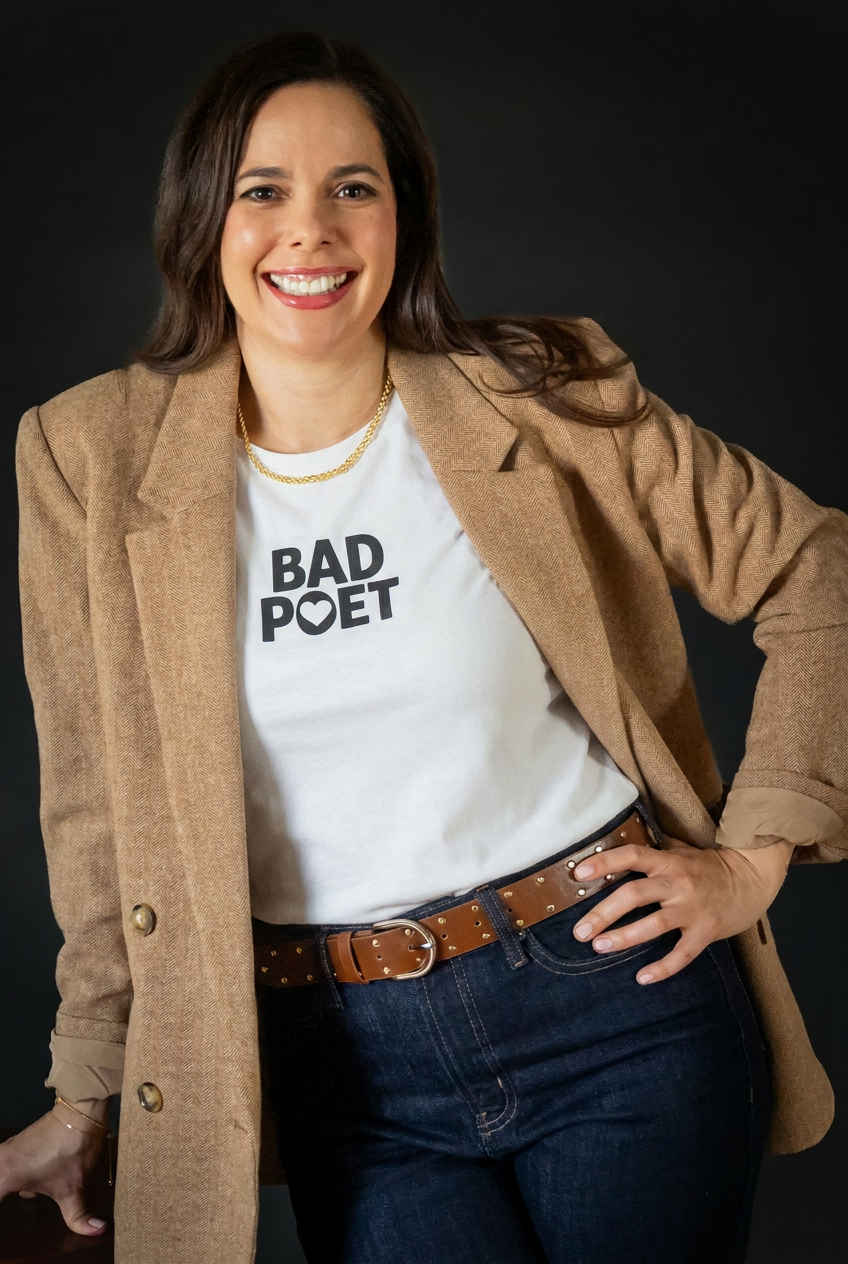
I’m a licensed Clinical Mental Health Counselor, author, and the founder of Sage Insight Therapy, a private therapy practice based in Salt Lake City, UT, USA. Across both private practice and psychiatric hospital settings, I have worked with individuals navigating depression, anxiety, trauma, addiction, and major life transitions.
I focus on helping people move away from the pressure to fix themselves and toward a process of understanding themselves. This shift is subtle, but it is powerful. When people are given permission to explore their inner world with curiosity rather than judgment, insight begins to emerge more naturally. And from that insight, better outcomes, connection and resilience follow.
A central part of my approach is the integration of poetry into the therapeutic process. Poetry, in this context, is not about being an award winning writer. It is a tool for expression. It allows people to engage with their thoughts and emotions in a way that is less structured, less filtered, and more aligned with how we actually experience life. Human experience is rarely linear. It is often fragmented, contradictory, and difficult to put into clear, logical language. Poetry creates space for that complexity.
